Natural Ways to Increase Testosterone That Actually Move the Needle
The most effective natural ways to increase testosterone are unglamorous, free, and take weeks to show — sleep, resistance training, losing excess fat, and fixing a real micronutrient gap. A supplement is the add-on to that foundation, never the shortcut around it.
What are the best natural ways to increase testosterone?
The best natural ways to increase testosterone are to sleep seven to nine hours, train with resistance twice a week, lose excess body fat, and correct any real vitamin D, zinc or magnesium shortfall. These work through normal physiology, build over eight to twelve weeks, and outperform any pill on their own.
- The four big levers: sleep duration and quality, resistance training, body-fat loss, and correcting a genuine micronutrient deficiency.
- Where a supplement helps: filling a real nutrient gap and supporting daily energy and stress tolerance while the fundamentals do the heavy lifting.
- What nothing natural can do: replace a hormone the body is not producing, or outrun five hours of sleep a night. No supplement treats or cures any condition.

What people really want from natural ways to increase testosterone
When a man searches for natural ways to increase testosterone, he is rarely holding a lab result. He is holding a set of symptoms: flat energy by mid-afternoon, less drive than he remembers, a body that gains weight easily and loses it grudgingly, and a suspicion that his hormones are behind all of it. Sometimes that suspicion is correct. Just as often the same cluster of symptoms is being driven by short sleep, chronic stress, weight gain, low activity, or simply being busy and under-recovered — conditions that are far more common than clinically low testosterone in a man under fifty.
That matters, because it changes the question. The useful question is not "which food or pill raises the number the most?" It is "given limited time and willpower, where does an hour of effort pay best?" That question has a clear answer, and it is a slightly uncomfortable one for anyone in the business of selling capsules: the boring, free interventions come first, and they come first by a wide margin. The rest of this guide sizes each lever honestly so you can spend your effort where it actually returns something.
None of this makes a supplement pointless. It makes it secondary — a supporting instrument rather than the melody. Get the foundation right and a well-built daily formula can add a little on top. Skip the foundation and no formula on the market will rescue the result.
Sleep: the foundation almost everyone underrates
If you only fix one thing, fix sleep. A large share of a man's daily testosterone output is tied to sleep architecture, and controlled studies show that restricting healthy young men to around five hours a night lowers their daytime testosterone measurably within about a week. That is one of the cleaner cause-and-effect signals in the whole field, and it is entirely free to act on.
Aim for seven to nine hours in a consistent window. Consistency matters as much as duration: going to bed and waking at roughly the same time stabilises the whole rhythm. Keep the room dark and cool, get daylight early, and stop treating the last hour before bed as productive time. And take snoring seriously. Untreated obstructive sleep apnoea — loud snoring, gasping, unrefreshing sleep, daytime sleepiness — suppresses normal hormone production and deserves a proper clinical assessment rather than a supplement. That is the one place where "try a natural fix first" is the wrong move.
Resistance training: the lever that compounds
Lifting weights produces a short-lived hormonal spike after a hard session, and the supplement industry loves to wave that spike around. Ignore it. The transient post-workout bump is small and of little practical significance. The durable benefit of training is indirect and much larger: more muscle, better insulin sensitivity, less fat mass, better sleep, and a steadier mood. Those changes create the internal environment in which normal testosterone production is easiest to sustain.
You do not need to live in the gym. Two to three sessions a week that cover the major movement patterns — a squat, a hinge, a press, a pull — and that get gradually heavier over time will do the job. Judge the programme on strength gained, waist size, and how you feel by mid-afternoon, not on a single blood draw taken an hour after a workout. Training is a compounding investment: the returns are modest week to week and substantial over a year.
Body fat and why losing it lowers aromatization
Excess body fat is not inert storage. It is metabolically active tissue, and one of the things it does is aromatization — converting testosterone toward oestrogen. The more excess fat a man carries, the more of this conversion tends to happen, which is part of why weight and testosterone track together across large populations. Meaningful fat loss in a man who is genuinely carrying too much is one of the most consistent ways to nudge his hormonal profile in the right direction.
This is also the slowest and hardest lever, which is precisely why so much is sold to help you avoid it. There is no bottle that reproduces the effect of losing excess fat. The honest path is a modest, sustained calorie deficit built on protein and whole foods, paired with the resistance training above so that the weight you lose is fat rather than muscle. Crash dieting is counterproductive here: severe under-eating suppresses the reproductive axis on its own, so aim for steady progress, not a punishment.
Where a supplement fits on top of the fundamentals
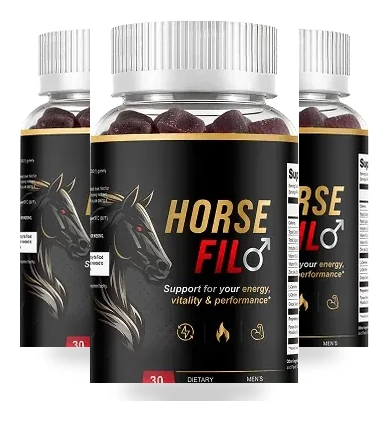
HorseFil is a once-daily men's energy and vitality gummy — named botanicals and amino acids, no hormone, no prescription, no stimulant. It is built to sit alongside the sleep, training and fat-loss work above, supporting daily energy and stress tolerance while the fundamentals do the structural job. If you want to see exactly what is in it, the official store publishes the current ingredient panel and offer.
See the Official HorseFil StoreThe micronutrients that genuinely matter
Three micronutrients have a real, mechanistic link to normal endocrine function: vitamin D, zinc, and magnesium. The key word is correcting. If you are genuinely short on any of them, fixing that shortfall is a real intervention with a real mechanism, and it can help. If your intake is already adequate, adding more on top does very little — more is not the mechanism, sufficiency is. Almost all of the mineral-based marketing in this category is carefully built to blur that distinction.
Vitamin D shortfall is common in men who spend their days indoors or live at higher latitudes; a blood test settles it. Zinc is lost in sweat and semen and can run low in heavy trainers or restrictive eaters. Magnesium is widely under-consumed and involved in hundreds of processes, energy metabolism among them. Food comes first — oily fish, eggs, red meat, shellfish, legumes, nuts and leafy greens cover a lot of ground — and a supplement is insurance against a gap, not a lever you can pull indefinitely for more effect.

Alcohol, stress and the smaller levers
Two more levers are worth naming because they are common and controllable. Heavy, chronic alcohol intake suppresses the reproductive axis, so for a regular heavy drinker cutting back is a bigger move than anything on a supplement shelf. Chronic psychological stress keeps cortisol elevated, which works against the same system; it is harder to measure but real, and the sleep, training and daylight habits above all help blunt it. Finally, run a quiet medication check with a pharmacist — several common prescriptions, including some opioids and glucocorticoids, lower testosterone, and that is a conversation rather than a purchase.
How long natural methods take to work
Set expectations correctly and you will stick with the plan; set them wrong and you will quit in week two. Sleep improvements can register within one to two weeks. Correcting a genuine nutrient deficiency takes several weeks to fill the tank. Body-composition and training effects build over two to six months. Put together, the honest window to judge natural methods is eight to twelve weeks of consistent effort, with the biggest structural gains arriving later still. Anything dramatic in the first few days is expectation, not physiology.
Two habits make the difference between guessing and knowing. First, measure once at the start — a morning total testosterone test before 10am, ideally repeated on a second day — so you are working from a fact rather than a fear. Second, keep a two-line daily log: hours slept and energy out of ten. Memory rewrites itself to match whatever you spent money or effort on; a log does not. If you want a structured plan for the first stretch, our walkthrough of what to expect in the first ninety days of a testosterone booster pairs the habit work with realistic milestones.
Three myths worth clearing up
Myth one: a booster replaces the work. This is the most expensive misconception in the category, because buying something creates a genuine feeling of having solved the problem, which quietly removes the pressure to fix sleep or lose the weight. A supplement is a rounding error on a bad week and a small bonus on a good one. Decide which kind of week you are running before you decide what a bottle is worth.
Myth two: low energy always means you need TRT. Testosterone replacement therapy is a genuine medical treatment for genuinely diagnosed deficiency, confirmed by repeated blood tests and managed by a clinician. It is not a lifestyle upgrade, and starting it forecloses natural production. If your symptoms are real, get tested before you assume the answer — and if you want to understand how a prescription hormone differs from an over-the-counter formula, we cover it in the practical differences between testosterone injections and supplements.
Myth three: results should come in days. They should not, and a product that promises they will is telling you something about its marketing rather than its mechanism. Nutrient repletion, adaptogen trials and training adaptations all run on a scale of weeks to months. If you are not prepared to give the plan eight to twelve weeks, you are not really testing it.
Frequently asked questions
What are the fastest natural ways to increase testosterone?
The fastest levers are the ones tied to short-term biology: get seven to nine hours of sleep, cut heavy alcohol, and correct a genuine vitamin D, zinc or magnesium shortfall. Sleep in particular can move daytime levels within a week or two. Body-fat loss and resistance training are slower but larger, and they compound over months rather than days. There is no honest shortcut that beats fixing sleep first.
Does diet really affect testosterone?
Yes, mainly through two channels. Chronically low energy intake and crash dieting suppress the reproductive axis, and being significantly overweight raises aromatization, which converts testosterone toward oestrogen. A varied diet with enough protein, adequate total calories, and no deficiency in vitamin D, zinc or magnesium supports normal production. Diet does not megadose testosterone upward, but poor diet reliably drags it down.
How long before natural methods show results?
Plan on eight to twelve weeks before judging anything, and longer for body-composition changes. Sleep improvements can register within a week or two, nutrient repletion takes several weeks, and the fat-loss and training effects build over months. Anything dramatic in the first few days is expectation rather than physiology, so keep a simple log and assess at the eight-to-twelve-week mark.
Do booster pills help on top of lifestyle changes?
They can play a supporting role, not a starring one. A supplement can fill a real micronutrient gap and support day-to-day energy and stress tolerance while the fundamentals do the structural work. No pill outperforms fixing sleep, training and body fat, and none replaces a hormone the body is not producing. Treat a booster as the add-on to the fundamentals, not a substitute for them.
Where to check this
- NIH National Heart, Lung, and Blood Institute — Sleep deprivation and deficiency
- Mayo Clinic — Exercise: benefits of regular physical activity
- NIH Office of Dietary Supplements — Zinc, health professional fact sheet
- NIH Office of Dietary Supplements — Vitamin D, health professional fact sheet
- PubMed — controlled trials on sleep, weight and testosterone in men (search record)
These are standing reference resources rather than citations of single trials. We link to the bodies that maintain the evidence summaries so you can check the current position yourself.
Build the foundation, then add the support
One gummy a day, a named ingredient list and a sixty-day satisfaction promise — taken alongside the sleep, training and fat-loss work, not instead of it. If you have decided that is the right role for a supplement, the official store is where the current panel and current offer live.
Go to the Official HorseFil Store