What Is Testosterone Booster Injection — and How Is It Different From a Supplement?
Two products, one word in common, and almost nothing else. One is a prescription hormone with a monitoring schedule attached. The other is food-law nutrition sold in a bottle. Confusing them is the most expensive mistake in this category.
Quick answer: injection or supplement?
A testosterone booster injection is not a supplement at all — it is prescription testosterone, the hormone itself, injected into muscle or under the skin under medical supervision after blood tests confirm a deficiency. An over-the-counter testosterone booster is a dietary supplement: vitamins, minerals and botanicals that contain no hormone and may support the body's own production and general vitality rather than replace anything. They are different categories of product answering different questions, and only one of them requires a doctor.
- Injection: a regulated medicine. Contains testosterone, needs a diagnosis, a prescription and ongoing blood monitoring.
- Supplement: a food-law product. Contains no hormone, cannot claim to treat anything, and works — if at all — slowly and modestly.
- The deciding question: has a blood test shown your testosterone is genuinely low? If yes, that is a clinic conversation. If no, a supplement is the only one of the two you can legitimately buy.

So what is testosterone booster injection, in plain terms?
When people search for what is testosterone booster injection, they are usually describing testosterone replacement therapy delivered by needle. The most common forms in the United States are testosterone cypionate and testosterone enanthate, oil-based esters injected into a large muscle or into the fat layer under the skin, typically every one to two weeks depending on the ester and the protocol. There is also a long-acting undecanoate given in a clinic at much wider intervals.
The important word is replacement. The drug puts exogenous hormone into circulation because the body is not producing enough of its own. That is why it works predictably and quickly compared with anything sold in a shop, and it is also why it carries a clinical apparatus around it: a diagnosis, a prescription, a schedule and repeated blood draws.
Getting a prescription is not a formality. Endocrine practice guidance is consistent on the sequence — symptoms plus at least two separate morning measurements of total testosterone in a reliable laboratory, with additional hormones checked to work out whether the problem sits in the testes or in the pituitary. Once treatment starts, testosterone levels, haematocrit and prostate-specific antigen are rechecked on a schedule. Nobody monitors a gummy that way, because nothing in a gummy justifies it.
Why the two products sit under completely different rulebooks
This is the part that explains everything else. In United States law, an injection of testosterone is a drug: it must be approved before sale, manufactured to pharmaceutical standards, dispensed on a prescription, and — because testosterone is a Schedule III controlled substance — tracked accordingly. Its labelling can make treatment claims because those claims were assessed by the regulator before approval.
A dietary supplement travels the opposite road. It is regulated as a category of food, not medicine. It is not approved before sale, it may not contain a hormone, and its label may only carry structure/function statements — language about supporting normal function — alongside the disclaimer that the statements have not been evaluated by the Food and Drug Administration. That disclaimer is not small print anybody chose to include. It is the price of admission for selling without pre-market approval.
So when a page selling capsules uses the phrase "testosterone booster", it is a marketing name for a product category, not a description of a proven pharmacological effect. Recognising that single fact makes the whole shelf easier to read.
The over-the-counter side of this comparison
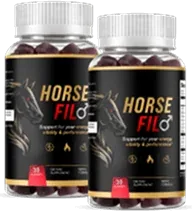
HorseFil sits firmly in the supplement column: a once-daily men's energy and vitality gummy with named botanicals and amino acids, no hormone, no prescription and no stimulant. If you are working out where to buy testosterone booster style formulas without a clinic visit, the official store publishes the current panel.
See the Official HorseFil StoreWhat an over-the-counter formula actually contains
Open the panel on almost any men's vitality product and you find four families of ingredient, each with a different quality of evidence behind it.
The first is straightforward nutrition: zinc, magnesium, vitamin D, sometimes boron. These matter because deficiency genuinely impairs normal hormone production. Correcting a real shortfall is a real intervention. Adding more on top of an adequate intake is not, and that distinction is where most of the category's marketing quietly collapses.
The second is adaptogens — ashwagandha, rhodiola, panax ginseng, maca root. These are studied mainly for stress, fatigue and wellbeing rather than for hormone levels. Ashwagandha has the most consistent human data on stress and sleep quality, and a handful of small trials have also looked at testosterone with mixed and modest results.
The third is blood-flow and metabolism support: L-citrulline for nitric oxide, L-carnitine for fatty-acid transport into the mitochondria. Neither is a hormone story. Both are delivery and energy stories, and both are strongly dose-dependent.
The fourth is the group that sells well and tests badly — tribulus terrestris and D-aspartic acid being the clearest examples. Controlled trials in men with normal testosterone have generally failed to show meaningful hormonal change, and in some cases showed levels moving the wrong way. An honest page says so.
Injection versus supplement, side by side
Same word on the box, entirely different objects. Here is what separates them on the dimensions that actually decide anything.
| Testosterone injection | OTC booster supplement | |
|---|---|---|
| What is in it | Testosterone ester in oil — the hormone itself | Vitamins, minerals, amino acids, botanical extracts. No hormone |
| Legal category | Prescription drug, Schedule III controlled substance | Dietary supplement, regulated as a food |
| How you obtain it | Diagnosis, prescription, pharmacy or clinic | Bought openly online or in shops |
| Pre-market approval | Yes — assessed before it may be sold | No — responsibility sits with the manufacturer |
| Effect on blood testosterone | Large and measurable; that is the mechanism | Small at best; often no measurable change in men who are not deficient |
| Evidence strength | Strong for diagnosed deficiency | Varies by ingredient — from reasonable to essentially absent |
| Monitoring required | Repeat bloods for testosterone, haematocrit, PSA | None required; a baseline panel is still sensible |
| Effect on fertility | Suppresses the body's own production and sperm output | No suppressive mechanism |
| Realistic timeline | Weeks for energy and mood; months for body composition | Two to three months of consistent daily use before judging |
Read across the fertility row twice. It is the single most under-discussed line in this comparison, and the one men in their thirties most often wish they had understood before starting.
A prescription hormone and a botanical capsule are not two strengths of the same thing. They are two different answers, and choosing between them is really a question about whether you have a diagnosis or a preference.
What neither route can do
Start with the supplement column, since that is what this site covers. No dietary supplement treats, cures, prevents or reverses low testosterone, hypogonadism or any other medical condition. If your testosterone is clinically low, a gummy is not a smaller dose of the fix — it is a different product entirely, and delaying a diagnosis in order to try one is the real risk in this whole discussion.
Supplements also cannot outrun the basics. Sleep debt, obesity, heavy alcohol intake, untreated sleep apnoea, chronic stress and certain medications all suppress testosterone, and none of them is corrected by anything in a bottle. A man sleeping five hours a night is not short of maca.
The prescription column has limits of its own that clinics do not always volunteer. Injections suppress the body's own production, which means reduced sperm output and potential fertility problems — a serious consideration for anyone who may want children. Haematocrit can rise enough to require dose changes or donation. Some men experience acne, fluid retention or mood changes. And treatment is generally ongoing: stopping returns you to a body whose own production has been switched down and takes time to recover.
There is one more limit worth stating plainly. Symptoms that get blamed on testosterone — fatigue, low mood, poor libido, weight gain — overlap almost perfectly with thyroid disease, depression, anaemia, diabetes and sleep disorders. All are common. All are treatable. None is diagnosed by a supplement purchase.
How to work out which conversation you should be having
The decision is less about products than about information, and it runs in a fixed order.
First, get a measurement. A morning total testosterone test, taken before about 10am and repeated on a second day, is the only thing that turns a suspicion into a fact. Symptoms alone are a poor guide; plenty of men with textbook symptoms have entirely normal levels, and plenty with low levels feel fine.
Second, if the result is genuinely low and repeated, that is a clinical pathway. Ask about the cause rather than jumping to treatment — secondary hypogonadism driven by weight, sleep apnoea or medication sometimes improves substantially when the cause is addressed, without lifelong therapy.
Third, if the result is normal, the honest framing changes. What you are shopping for at that point is energy, stress tolerance, blood flow and consistency, not hormone replacement. That is a legitimate thing to want, and it is exactly the space that men's daily formulas occupy. Anyone comparing the best testosterone booster to buy online should judge the products on named ingredients at sensible amounts, a published panel, no hidden proprietary blends, and a returns policy — not on the promise of a number changing.
Fourth, whichever route you take, fix the inputs underneath it. We covered that trade-off in detail in pills versus habits for testosterone, which compares what a supplement plausibly contributes against what sleep, training and body composition contribute. The gap is larger than most product pages would like you to know.
Where a daily formula honestly fits
Somewhere between "does nothing" and "changes your hormones", which is an unglamorous place to sit but an accurate one. A well-built men's formula supplies nutrients involved in normal hormone production, botanicals with reasonable data on stress and fatigue, and amino acids involved in circulation. For a man who is not deficient, the realistic outcome is a modest improvement in how he feels through the day, not a different endocrine profile.
That is the frame HorseFil is sold in — a once-daily gummy for steady energy and vitality without stimulants, rather than a hormone product wearing a supplement's clothes. If a page anywhere promises the effect of an injection in capsule form, the appropriate response is to close the tab.
Frequently asked questions
What is testosterone booster injection, in one sentence?
It is prescription testosterone given by injection into muscle or under the skin, used under medical supervision when blood tests and symptoms point to a diagnosed deficiency. The bottle contains the hormone itself, which is why it is regulated as a medicine and cannot be bought over the counter in the United States.
Can an over-the-counter supplement do the same thing as an injection?
No. A supplement contains no testosterone, so it cannot replace a hormone the body is not making. Supplements work indirectly at best, by supplying nutrients involved in normal hormone production or by supporting energy, stress tolerance and blood flow. The size of any effect is far smaller and far less certain than a prescribed medicine.
Do you need blood tests before starting either one?
For injections, yes. Guidelines call for at least two morning total testosterone measurements before treatment starts, plus follow-up checks of testosterone, haematocrit and prostate markers during therapy. For supplements no testing is required, but a baseline blood panel is still the only way to know whether low testosterone is actually your problem.
Are over the counter testosterone boosters safe?
Most common ingredients are well tolerated by healthy adults at label amounts, but safety is not guaranteed by the format. Botanicals can interact with prescription medicines, some products have been found adulterated with undeclared drug ingredients, and the category is not pre-approved by the FDA. Read the full panel and speak to a pharmacist if you take any medication.
Where to check this
- Mayo Clinic — Testosterone therapy: potential benefits and risks as you age
- NIH Office of Dietary Supplements — Zinc, health professional fact sheet
- National Center for Complementary and Integrative Health — Ashwagandha
- PubMed — controlled trials of testosterone booster supplements (search record)
- Harvard Health Publishing — Is testosterone therapy safe?
These are standing reference resources rather than citations of single trials. We link to the bodies that maintain the evidence summaries so you can check the current position yourself.
No prescription, no hormone, no stimulant
One gummy a day, a named ingredient list and a sixty-day satisfaction promise. If you have decided the supplement column is the right one for you, the official store is where the current panel and the current offer live.
Go to the Official HorseFil Store