Natural Testosterone Booster: What to Look For on the Label
The word "natural" is doing a lot of heavy lifting on supplement bottles — and almost none of it is regulated. Here is how to read past it to the four label tells that actually decide whether a formula is worth your money.
Quick answer: what should a natural testosterone booster label show?
A trustworthy natural testosterone booster shows standardised plant extracts with disclosed milligrams for every ingredient, no proprietary blend hiding the amounts, and third-party or GMP testing. The word "natural" is unregulated and proves nothing by itself. What proves something is a label you can read, dose by dose, and check against the studies.
- Read for: named, standardised extracts at a stated milligram dose, not vague "herbal complex" lines.
- Reject: proprietary blends, because they let brands underdose the ingredient you came for.
- Verify: GMP manufacturing and third-party testing, so the label matches what is in the bottle.

What "natural" actually signals on a testosterone booster
Here is the uncomfortable starting point: on a supplement label, "natural" is a marketing word, not a regulated one. A natural testosterone booster can be a rigorously standardised, honestly dosed formula, or it can be a pinch of herb powder sold at a premium — and the word on the front tells you nothing about which. Regulators do not police it the way they police, say, "organic." So the job of the buyer is to treat "natural" as the beginning of the question, not the answer.
That is not a reason to dismiss natural formulas. Most men shopping in this category specifically do not want a synthetic hormone or a stimulant; they want botanicals and nutrients that support how they feel day to day, without a prescription. That is a legitimate goal, and there are genuinely good products built for it. The problem is that the same shelf holds a lot of near-identical bottles, and the honest ones and the filler ones use exactly the same front-label vocabulary. Distinguishing them is a skill, and it is entirely learnable.
The skill lives on the back of the bottle, in the Supplement Facts panel. Everything that matters — whether an extract is standardised, how many milligrams you actually get, whether the amounts are disclosed at all — is printed there in small type that the marketing hopes you will skip. Learn to read four things on that panel and you can sort the shelf faster than any ranking site.
Label tell #1: standardised extracts, not vague plant names
A plant name alone is close to meaningless. "Ginseng root" could be a potent standardised extract or a spoonful of milled root with a fraction of the active compounds. What you want to see is standardisation: a note that the extract is concentrated to a specific percentage of its active constituent, and ideally a ratio such as 100:1. Standardisation is the difference between a defined, repeatable dose and a gamble on whatever happened to be in that batch.
This is also where a lot of quiet cost-cutting hides. Whole-herb powders are cheap; standardised extracts are not. A label that lists impressive botanicals but never mentions standardisation is often telling you, in the negative, that it took the cheap route. The botanicals with the best data — tongkat ali in particular — were studied as standardised extracts, so a non-standardised version is not the same product the research is talking about.
Label tell #2: disclosed milligrams for every ingredient
This is the single most important line to check, and the one the industry works hardest to obscure. Every ingredient should have its own milligram figure next to it. When it does, you can compare that number against the studied range and know whether you are getting a real dose or a token gesture. The evidence-based targets are not secret: tongkat ali at 200 to 400mg, ashwagandha at 300 to 600mg, vitamin D at 3000 to 5000 IU where intake is low, and zinc around 30mg. With disclosed amounts, "contains tongkat ali" becomes "contains a dose that has actually been tested," which is a completely different claim.
If you want the full evidence-and-dose picture for the category's headline ingredient, we lay it out in our guide to Tongkat Ali evidence and dosage. The short version: the dose is the ingredient. Without it, the name on the label is decoration.
Label tell #3: no proprietary blends
A "proprietary blend" line groups several ingredients under one total weight, so you learn that a blend is 1,200mg but never how that 1,200mg is divided. In practice this almost always means the cheap, high-volume ingredients dominate and the expensive, well-known one is present in a trace amount — enough to print on the label, not enough to do what the studies did. Brands defend blends as protecting a secret recipe. The more honest reading is that a blend protects the brand from you noticing the underdosing.
The rule is simple and almost never wrong: if you cannot see the milligrams for the ingredient you actually came for, assume it is underdosed. A formula confident in its doses discloses them. A formula hiding them usually has a reason. This one tell alone will disqualify a large share of the shelf, which is exactly why it is so useful.
A transparent label you can actually read
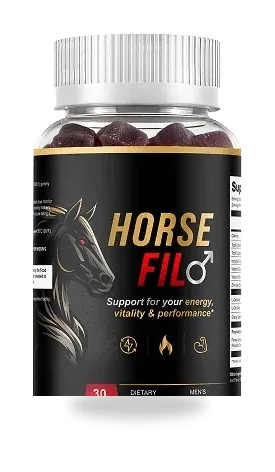
HorseFil is a once-daily men's energy and vitality gummy built on the principles in this guide: named botanicals and amino acids — panax ginseng, maca, rhodiola, L-citrulline and L-carnitine — presented as a disclosed panel rather than a proprietary blend, with no hormone and no stimulant. To see the current formula and check it against the four label tells, the official store lists everything in one place.
See the Official HorseFil StoreLabel tell #4: third-party testing and GMP manufacturing
The first three tells assume the label is telling the truth. This one checks that assumption. Dietary supplements are not pre-approved by the FDA, so the burden of quality falls on the manufacturer — and standards vary enormously. Two signals do most of the work. GMP (Good Manufacturing Practice) certification means the facility follows enforced standards for identity, strength and cleanliness. Third-party testing means an outside lab has verified that what is on the label is what is in the bottle, and that common contaminants are not.
Without these, even a beautifully disclosed label is a promise rather than a fact. "Natural" and "safe" are not synonyms, and a botanical product from an unaccountable facility can be underdosed, over-dosed or contaminated regardless of how clean the front of the bottle looks. When you are comparing two products with similar panels, manufacturing quality is often the tiebreaker — and it is one of the few things a serious brand will state plainly.
| Label tell | Serious formula | Filler formula |
|---|---|---|
| Extract quality | Standardised extract, stated ratio | Whole-herb powder, no standardisation |
| Dosing | Milligrams disclosed per ingredient | Amounts hidden or vaguely "supports" |
| Blend structure | Every ingredient itemised | Grouped inside a proprietary blend |
| Verification | GMP certified, third-party tested | No testing or facility detail |
| Claims | Supports energy, stamina, vitality | Treats, cures or reverses conditions |
Which natural ingredients are actually worth the label space
Reading a label well only helps if you know what belongs on it. A short list of natural ingredients has real human support, and it is worth committing to memory. Tongkat ali has the strongest evidence for testosterone itself. Ashwagandha has data on stress, sleep and recovery, which matter because stress and poor sleep suppress hormone production in the first place. Correcting a genuine vitamin D or zinc shortfall supports normal endocrine function — the operative word being "shortfall," since topping up an adequate level does little.
Then there is the honest middle tier: botanicals like panax ginseng, maca and rhodiola, which have reasonable data on energy, stamina and stress tolerance rather than on moving a hormone number directly. These are genuinely useful in the right role, and misleading only when a label implies they overhaul your endocrinology. Good products use them for what they do; hype-driven ones borrow their "natural" halo to imply something bigger. For the broader picture of which levers move testosterone at all, our overview of natural ways to increase testosterone puts supplements in their realistic place alongside sleep, training and body composition.
What you will not find on a defensible list is tribulus terrestris, despite its ubiquity. Its reputation as a booster has outlived the evidence, and reviews have repeatedly failed to show it raising testosterone. Its presence as a headline ingredient is a reliable sign a formula was designed for the shelf rather than the study — a useful shortcut when you are sorting quickly.
How HorseFil reads against these tells
HorseFil is deliberately built around the middle-tier botanicals above — panax ginseng, maca and rhodiola alongside the amino acids L-citrulline and L-carnitine — and it is sold for exactly what those ingredients support: steady daily energy, stamina and stress tolerance, without a hormone, a stimulant or a prescription. That is a narrower claim than most of the shelf makes, and it is narrower on purpose, because it matches the evidence rather than outrunning it.
On the four tells, what matters is that the formula is presented as a transparent, named-ingredient panel rather than a proprietary blend, and produced to the manufacturing standards this guide tells you to demand. Because formulas and amounts can change, we do not freeze a panel into this article; the honest step is to read the current HorseFil ingredient list and run it through the four tells yourself. If it shows standardised, disclosed, itemised, verified ingredients, it earns your consideration. If a future version slips on any of those, the same four tells will tell you — which is the entire point of learning them.
Frequently asked questions
What does a natural testosterone booster actually mean?
Very little on its own. The word natural is not regulated on supplement labels, so it can describe an underdosed blend just as easily as a serious formula. What matters is what sits beneath the word: standardised plant extracts, disclosed milligrams for every ingredient, and no proprietary blend hiding the amounts. Treat natural as a starting point, then judge the label.
Are natural testosterone boosters safe?
Most well-formulated botanical and amino-acid products are well tolerated by healthy adults, but natural does not mean risk-free. Ingredients can interact with medications, and quality varies widely between manufacturers. Choose products made in a GMP-certified facility with third-party testing, follow the label dose, and speak to a doctor or pharmacist first if you take prescription medication or manage a health condition.
Which natural ingredients have real evidence?
A short list holds up: tongkat ali at 200 to 400mg has the strongest human data, ashwagandha at 300 to 600mg has support for stress and recovery, and correcting a genuine vitamin D or zinc shortfall supports normal hormone production. Botanicals such as ginseng, maca and rhodiola have reasonable data on energy and stress rather than on hormone levels directly.
Can a natural booster replace TRT?
No. Testosterone replacement therapy is a prescription medicine that adds hormone the body is not producing, used under medical supervision for a diagnosed condition. A natural booster is a dietary supplement that supports normal function and cannot replace a hormone or treat a medical condition. If a blood test shows genuinely low testosterone, that is a conversation with a doctor, not a supplement decision.
Where to check this
- U.S. FDA — Dietary supplements: what they are and how they are regulated
- NIH Office of Dietary Supplements — ingredient fact sheets (zinc, vitamin D and more)
- PubMed — randomised trials of Tongkat Ali (Eurycoma longifolia) and testosterone
- PubMed — ashwagandha, stress and testosterone in men
- NSF — how third-party supplement certification works
These are standing reference resources rather than citations of single trials. We link to the bodies that maintain the evidence summaries so you can check the current position yourself.
Related reading
Read the label, then decide
Standardised extracts, disclosed milligrams, no hidden blend, verified manufacturing — that is the whole test. If HorseFil passes yours, the official store has the current panel, pricing and satisfaction guarantee together.
Go to the Official HorseFil Store