How to Get Testosterone Booster Results: A Realistic First 90 Days
Most men in this category never find out whether the product did anything, because they quit in week three or judge it on day four. Ninety days, one variable at a time, and two lines in a notebook is all it takes to get an actual answer.
Quick answer: how to start, and how long to give it
An over-the-counter testosterone booster is a dietary supplement, so you can buy one online or in a shop today without a prescription or a blood test. Take it once daily at the same time, change nothing else for the first month, and give it a full ninety days before deciding whether it earned its place, because nutrient repletion takes weeks and most trials on the botanical ingredients run one to three months. Set your success criteria in writing before day one, or you will grade the result on whatever you happen to feel in week twelve.
- Getting one: no prescription needed for a supplement. A prescription is only involved if you are seeking testosterone itself, which is a controlled medicine and a separate route.
- The clock: ninety days of consistent daily use. Nothing you notice in the first three days is pharmacology.
- The method: one change at a time, two lines logged a day, and a decision rule written down before you start.
How to get testosterone booster products without a prescription
This is the part people overcomplicate. An over-the-counter men's formula is legally a dietary supplement, which means it is regulated as a category of food rather than as a medicine. It contains no hormone, requires no diagnosis and needs no prescription. You can order one online, or pick one off a shelf in a pharmacy, supermarket or health shop, and nobody will ask you a question.
The confusion comes from the word "testosterone" doing two jobs. If what you actually want is the hormone, that is a completely different route: repeat morning blood tests, a clinician's diagnosis, a prescription and ongoing monitoring, because testosterone is a scheduled controlled substance in the United States. Nothing sold openly can contain it, and any product hinting otherwise is either misdescribing itself or has a bigger problem than marketing.
So when men ask where to buy testosterone booster formulas, the practical answer is: almost anywhere, and the buying decision is about the label rather than the channel. Four things separate a defensible product from a poor one, and none of them requires expertise to check.
First, a full ingredient panel with amounts stated per serving, not a proprietary blend that hides how much of anything you are getting. Second, ingredients you can look up individually. Third, a manufacturer that names a facility standard. Fourth, a returns policy long enough to cover a real trial period — a thirty-day window is not much use for a product that needs ninety days to evaluate.
Buying direct from the official store matters more than it sounds. Supplement listings on general marketplaces are a mixed pool of authorised and unauthorised sellers, which affects both what you receive and whether any guarantee applies to you.
Before day one: three things worth doing first
Spending twenty minutes here changes what the next three months are worth.
Get a baseline measurement if you can. A morning total testosterone test, drawn before about 10am and repeated on a second day, is the only way to know whether low testosterone is genuinely your issue. It protects against both expensive errors: treating a normal result as a problem, and treating a real deficiency with a supplement while the actual cause goes unexamined. If your result comes back low twice, that is a clinic conversation, not a purchase.
Write down what would count as success. Be specific and behavioural rather than vague: making it through the afternoon without a crash, getting to the gym three times a week instead of one, feeling ready to train rather than dragging yourself. "More energy" is not a criterion, it is a mood. A target defined afterwards is one you will always claim to have hit.
Check for interactions. Botanicals are not inert. Some can interact with blood thinners, blood pressure medicines, diabetes medication, immunosuppressants and antidepressants. If you take anything on prescription, or you have a health condition, run the panel past a pharmacist first. This takes one conversation and is the single most useful safety step in the whole plan.
If you have picked your product
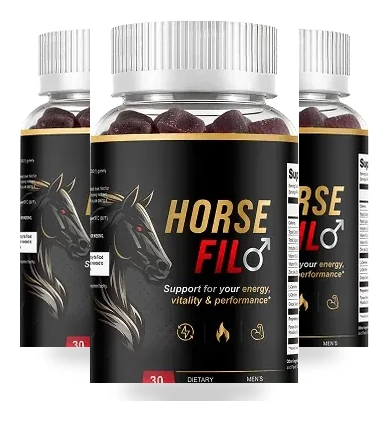
HorseFil is a once-daily men's energy and vitality gummy with a named ingredient panel, no hormone, no prescription and no stimulant. If you have decided which is the best testosterone booster you can buy for your own criteria and want the current panel, supply options and guarantee terms in one place, they live on the official store page.
See the Official HorseFil StoreDays 1 to 30: build the routine, change nothing else
The first month has exactly one job, and it is not feeling different. It is establishing that you actually take the thing every day, at the same time, without thinking about it.
Anchor the dose to something you already do without fail — the coffee machine, brushing your teeth, the commute. Habit research is consistent on this: attaching a new behaviour to an existing cue beats relying on intention. Keep the bottle where the cue happens, not in a cupboard you open occasionally.
Resist the urge to stack. Starting a supplement, a new training programme, a diet and an earlier bedtime in the same week guarantees you will learn nothing about any of them. If you are going to overhaul your sleep as well — and for most men that is the bigger lever — do it first, on its own, and start the supplement afterwards against a stable baseline.
Log two lines a day. Hours slept, and energy out of ten. That is it. Thirty seconds, and it beats memory comfortably, because memory quietly rewrites itself to justify whatever you spent money on. A phone note is fine.
Expect very little this month. Some men notice a mild lift in the first fortnight; plenty notice nothing at all, and that is entirely normal and not a reason to stop. Ingredients that work by correcting a nutrient shortfall need weeks to shift status, and adaptogens are typically studied over longer windows than this.
Days 31 to 60: the window where most people quit
Month two is where the category loses most of its users. The novelty has worn off, nothing dramatic has happened, and the bottle starts getting skipped on weekends. Two things help.
The first is re-reading your criteria. People who set a specific target in week zero and check against it in week six are far less likely to abandon a trial than people relying on a general sense of whether it is working, because a general sense at week six is dominated by whatever kind of week you have had.
The second is looking at the log rather than at today. Trends are invisible from inside them. Compare the middle two weeks of month two against the first two weeks of month one and you will often see something the day-to-day feeling completely hides — usually in sleep consistency or in how many days you trained, which is exactly the sort of second-order change that matters more than the number itself.
This is also the point to be honest about the confound. If you started going to bed earlier, drinking less and moving more when you started the bottle — which is what starting something does to people — then any improvement is shared credit at best. That is not a reason to be cynical. It is a reason to hold the attribution loosely.
Do not increase the dose because nothing has happened. More is not the mechanism, and label amounts exist for a reason. If you are tempted to double up, the honest read is that the product is not doing what you hoped, which is information rather than a problem to solve with volume.
Days 61 to 90: judging it honestly
Month three is the assessment phase, and it should be as unromantic as possible.
Go back to the criteria you wrote before day one, and grade them individually rather than as a feeling. Did the afternoon crash get less frequent? Did training consistency improve? Did the evening slump shift? Score each one honestly, including the ones that did not move.
Consider a repeat blood test if you took a baseline, but hold your expectations low and interpret it carefully. Testosterone varies substantially between days and across the morning, so a single follow-up number is a weak comparison and should never be treated as a verdict. What it is genuinely good for is catching a downward drift that deserves proper assessment.
Then apply a simple decision rule. If two or more of your written criteria improved and stayed improved, continuing is defensible. If none moved after ninety consistent days, this product at this dose is not doing much for you, and the honest response is to stop rather than to keep buying it in the hope that month five is different.
Whatever you conclude, resist upgrading the conclusion. "My afternoons are steadier" is a legitimate outcome. "My testosterone is fixed" is not something a supplement trial can tell you, and treating it as though it were is how men end up ignoring symptoms that deserved a clinician.
| Phase | Main job | What to track | Realistic expectation |
|---|---|---|---|
| Week 0 — setup | Baseline bloods, written criteria, pharmacist check | Starting point, current medicines | No effect — this is preparation |
| Days 1–30 | Build the daily habit, change nothing else | Doses taken, hours slept, energy out of ten | Little to nothing; mild lift in some men |
| Days 31–60 | Hold consistency through the drop-off window | Same two lines, plus training days per week | Subtle trend changes visible only in the log |
| Days 61–90 | Grade against the written criteria | Criteria scored individually, optional repeat bloods | Modest, gradual change if any |
| Day 90 — decision | Continue, stop, or escalate to a clinician | Which criteria moved and stayed moved | A defensible answer either way |
The point of ninety days is not to give the product a fair chance. It is to give yourself a result you can actually trust — including the result where the answer is no.
What ninety days cannot do
Being clear about the ceiling is more useful than another paragraph of encouragement.
No dietary supplement diagnoses, treats, cures, prevents or reverses low testosterone, hypogonadism or any other medical condition, and no length of trial changes that. If your levels are genuinely and repeatedly low, ninety days spent on a gummy is ninety days not spent getting the cause investigated. That delay is the only real risk in this plan.
Ninety days also cannot separate the supplement from everything else that changed. Unless you genuinely held the rest of your life constant — and almost nobody does — you are measuring a bundle. Sleep, training, stress and season all moved too. Weighing that honestly is why we put the habits comparison in a separate article; the short version is that the bundle usually contributes more than the bottle.
It cannot substitute for a diagnosis of the other common causes, either. Fatigue, low drive, poor concentration and weight gain overlap almost perfectly with thyroid problems, anaemia, depression, sleep apnoea and diabetes. All are common, all are manageable with proper care, and none is ruled in or out by how you feel at day ninety.
And it cannot make weak evidence strong. Some ingredients in this category have reasonable human data for fatigue, stress or circulation. Others — tribulus terrestris and D-aspartic acid being the usual examples — have repeatedly failed to show meaningful hormonal change in men with normal levels. A disciplined ninety-day trial of an ingredient with no evidence behind it is still a disciplined trial of nothing.

Making the call at day 90
Three outcomes, and all three are legitimate.
If several criteria improved and held, continuing is reasonable. Buy the supply length that matches how you actually behave rather than the one with the best headline — a longer supply only saves anything if you finish it, and a half-used bottle in a drawer is the most expensive format there is.
If nothing moved, stop. That is a real answer, arrived at properly, and it is worth more than another three months of hoping. You now also know something useful: whatever is behind the symptoms is not being touched by this, which strengthens the case for looking elsewhere.
If things got worse, or new symptoms appeared, book an appointment. Do not troubleshoot it with a different bottle.
Whichever way it goes, the leverage sits upstream of the purchase. We set out the comparison in pills versus habits for testosterone, which grades sleep, body composition and training against what a supplement plausibly adds. And if you want to understand why no label in this category is allowed to promise a hormonal outcome in the first place, the rules behind supplement labelling explain what those carefully worded phrases legally mean.
The frame that survives all of this is a modest one. HorseFil is sold as a once-daily gummy for steady energy and vitality without stimulants — a supporting player in a ninety-day plan whose main characters are sleep, training and body composition. Judged on that basis, it can do a job. Judged as hormone replacement in a bottle, nothing in this category passes, and no honest page will tell you otherwise.
Frequently asked questions
How to get testosterone booster products in the United States?
Over-the-counter testosterone booster supplements are sold openly online and in pharmacies, health shops and supermarkets, with no prescription and no blood test required. Prescription testosterone is a different product entirely: it contains the hormone itself, is a controlled substance, and can only be obtained from a clinician after repeat morning blood tests confirm a deficiency.
Can you buy testosterone booster over the counter?
Yes, if you mean a dietary supplement. Those products contain vitamins, minerals, amino acids and botanical extracts rather than any hormone, so they are regulated as food and need no prescription. What you cannot buy over the counter is testosterone itself, in any form, because it is a scheduled prescription medicine in the United States.
How long should I take one before deciding whether it works?
Give it a full ninety days of consistent daily use. Nutrient repletion takes several weeks, and most human trials on the botanical ingredients in this category run between one and three months. Judging at day ten tells you about your expectations rather than about the product, and stopping at week three is the most common reason people never get an answer either way.
What would be a good reason to stop before ninety days?
Stop and speak to a clinician if you get any reaction you did not have before, such as rash, stomach upset that does not settle, headaches or sleep disturbance. Stop also if you start a new prescription medicine, since botanicals can interact with them. And treat worsening symptoms as a reason to get assessed rather than a reason to increase the dose.
Where to check this
- Mayo Clinic — Male hypogonadism: symptoms and causes
- NIH Office of Dietary Supplements — Magnesium, health professional fact sheet
- National Center for Complementary and Integrative Health — Rhodiola
- Harvard Health Publishing — Men's health resources
- PubMed — twelve-week supplement trials in men (search record)
These are standing reference resources rather than citations of single trials. We link to the bodies that maintain the evidence summaries so you can check the current position yourself.

Start the ninety days properly
One gummy a day, a named ingredient list and a sixty-day satisfaction promise — long enough to run the plan above and still be covered. The official store is where the current panel, supply options and guarantee terms live.
Go to the Official HorseFil Store