Do You Need a Prescription for Testosterone Pills? Why Supplement Labels Cannot Make Hormone Claims
The careful, hedged wording on the back of a men's supplement is not marketing cowardice. It is the boundary line between a food and a drug, and once you can see it, the whole category becomes readable.
Quick answer: prescription or not?
It depends entirely on what is inside the capsule. Pills that contain testosterone itself are prescription medicines and controlled substances in the United States, so they can only be obtained through a clinician and a pharmacy. Pills sold openly as testosterone boosters contain no hormone — they are vitamins, minerals and botanicals regulated as dietary supplements, need no prescription, and for exactly that reason are not allowed to claim they raise a hormone or treat a condition.
- Contains the hormone: prescription only. Oral testosterone products are Schedule III controlled substances.
- Contains herbs and nutrients: no prescription, but the label may only say it supports normal function, with the FDA disclaimer attached.
- The tell: any product promising drug-strength results with no prescription is either overstating what it does or breaking the law. Both are reasons to walk away.
Two completely different products share the same shelf name
The phrase "testosterone pills" is doing double duty, and almost every argument about this category traces back to that ambiguity.
The first meaning is a real pharmaceutical. Oral testosterone products exist and are prescribed — modern formulations use testosterone undecanoate absorbed through the lymphatic system to avoid the liver problems that plagued older oral androgens. They contain the hormone, they change blood levels measurably, and they are dispensed on prescription with monitoring attached.
The second meaning is the supplement aisle: capsules and gummies built from zinc, magnesium, vitamin D, ashwagandha, fenugreek, maca, ginseng and similar. They contain no androgen of any kind. They are sold as nutrition, and they are legally forbidden from being anything else.
Because both are called "testosterone pills" in everyday speech, buyers arrive at a supplement page carrying expectations formed by the drug, and sellers are tempted to nod along without ever saying anything actionable. The result is a page full of implication and nothing you can pin down.
So do you need a prescription for testosterone pills sold online?
Do you need a prescription for testosterone pills you find on a shopping site? For anything legitimately sold there, no — and that is precisely the proof that it contains no testosterone. The logic runs in one direction only: if it were an androgen, it could not be on open sale, because anabolic steroids including testosterone were placed under the Controlled Substances Act as Schedule III. Possession without a prescription is a criminal matter, not a shipping inconvenience.
This has a practical consequence for anyone comparing over the counter testosterone boosters. The absence of a prescription requirement is not a loophole the brand found, and it is not evidence that the product is a gentler version of the drug. It is a statement about the contents. A supplement is allowed on the shelf because of what is missing from it.
The same reasoning applies to the SARM products that circulate in fitness marketplaces. Selective androgen receptor modulators are not lawful dietary ingredients, the FDA has warned publicly about body-building products containing them, and buying one because it is easier to obtain than a prescription inverts the entire risk calculation.
What a compliant men's formula looks like
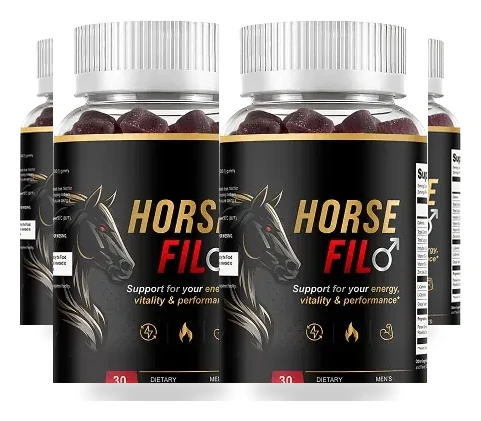
HorseFil is a once-daily men's energy and vitality gummy: named botanicals and amino acids, no hormone, no stimulant, no prescription. If you have been trying to work out where to buy testosterone booster style products that stay inside the rules, the official store publishes the current panel and offer.
See the Official HorseFil StoreWhy the label hedges: the structure/function rule
Under the Dietary Supplement Health and Education Act of 1994, supplements are regulated as a category of food. They do not go through pre-market approval. In exchange for that freedom, the claims they may make are tightly bounded.
A supplement may make what regulators call a structure/function statement: it may say an ingredient supports, maintains or helps a normal body process. It may not say the product diagnoses, treats, cures, prevents or mitigates a disease. Any statement of the first kind must be accompanied by the familiar disclaimer — that the claim has not been evaluated by the Food and Drug Administration — and the manufacturer is expected to notify the agency and hold substantiation for what it says.
That is why the wording you find on a men's formula is always some version of "supports healthy testosterone levels already within the normal range" or "supports energy, stamina and vitality". Say instead "raises low testosterone" or "treats hypogonadism" and the product has, in regulatory terms, declared itself an unapproved drug. The hedge is not weasel language chosen by a nervous copywriter. It is the sentence the law permits.
Once you know this, a useful reading habit follows. Vague benefit language on the label is normal and expected. Specific disease language on the label is a red flag — not because the product is stronger, but because the seller is either uninformed or willing to break rules, and neither says anything good about what is in the bottle.
Translating label language into what it actually means
Here is the same product described three ways, and what each phrasing legally commits the seller to.
| Phrase on the pack | Regulatory status | What it does not tell you |
|---|---|---|
| "Supports healthy testosterone levels" | Permitted structure/function statement with disclaimer | Whether any measured change occurs, or in whom |
| "Clinically studied ingredient" | Permitted; refers to the ingredient, not the finished product | Whether this product uses the studied form or amount |
| "Doctor formulated" | Unregulated marketing phrase | Anything verifiable about quality or evidence |
| "Proprietary blend, 850 mg" | Permitted — only the blend total must be declared | How much of each ingredient you are getting |
| "FDA registered facility" | True but weak — registration is not approval | Whether the product was tested or approved by anyone |
| "Treats low testosterone" | Not permitted on a supplement — a drug claim | That the seller is following the rules at all |
| "Third-party tested" with a named programme | Voluntary certification, verifiable | Efficacy — testing confirms contents, not benefit |
The last row is the only one on that grid you can independently check, which is why it is worth more than the other six combined.
A label that hedges is following the rules. A label that promises is either exaggerating or breaking them. In this category, the cautious wording is the honest wording — and the bold wording is the warning sign.
Four myths this rule quietly demolishes
Myth one: the FDA approved it. No supplement is approved before sale. Manufacturing facilities register with the agency and are expected to follow good manufacturing practice, but registration is an address on a list, not a verdict on a product. Any page that blurs those two things is telling you something about itself.
Myth two: the vague wording means the product is weak, so a bolder brand must be stronger. It means the opposite. Every compliant brand in the category uses similar language because they are all bound by the same rule. Bolder wording indicates a bolder seller, not a better formula.
Myth three: "natural" means it cannot interact with anything. Botanicals are pharmacologically active. Ginseng and several other common ingredients can interact with anticoagulants, diabetes medication and blood pressure drugs. Natural describes the origin, not the safety margin.
Myth four: if it is sold on a major marketplace, someone has vetted it. Listings are not audits. The FDA maintains a public database of tainted products — largely sexual-enhancement and weight-loss supplements found to contain undeclared prescription drug ingredients such as sildenafil analogues. Those products were, by definition, on sale before anyone tested them. That database is the single most useful bookmark in this whole category.
What the labelling rules cannot do for you
Being honest about the limits of this framework matters as much as explaining it.
The rules do not verify that the product works. A perfectly compliant label can sit on a formula whose ingredients have thin human evidence, because compliance governs what may be said, not whether it is worth buying.
They do not guarantee the contents match the panel. Without pre-market approval, the check happens after the fact, and independent testing has repeatedly found products in this broad category that under-deliver, over-deliver or contain something undeclared.
They do not protect you from interactions. Nothing on a supplement label knows what is in your medicine cabinet. If you take anticoagulants, antihypertensives, diabetes medication or antidepressants, the pharmacist is the check, and it is a free one.
And they cannot make a supplement into a treatment. No product in this category treats, cures, prevents or reverses low testosterone or any other condition, and no wording on any label changes that. If symptoms are persistent — fatigue, low libido, low mood, loss of morning erections — the correct next step is a blood test, not a basket. We set out how that pathway differs from the supplement one in our piece on testosterone injections versus supplements.
How to read a panel in sixty seconds
Turn the box over and work through five things in order.
One: is every active ingredient listed with its own amount, or are several hidden inside a blend? Individually disclosed amounts are the single strongest signal of a brand that expects to be checked.
Two: are the amounts in the same territory as the published research on those ingredients, or are they token inclusions there to decorate the list? A named ingredient at a fraction of the studied amount is not a milder version of the study.
Three: which form is used? Extract ratios and standardisation matter for botanicals, and a root powder is not interchangeable with a standardised extract.
Four: is there a third-party testing mark you can verify, and does the company publish a certificate of analysis on request?
Five: what does the claim actually say? If it stays inside supporting normal function, the brand understands its lane. If it promises to fix a diagnosis, close the page — that applies whether you are looking at the best over the counter male testosterone booster listings or a bottle in a supermarket.
Applied to the product this site covers, that checklist is exactly how we would want you to assess what HorseFil is and is not: a daily men's energy and vitality gummy, sold under food law, with the same disclaimer and the same limits as everything else on the shelf.
Frequently asked questions
Do you need a prescription for testosterone pills?
For pills that contain testosterone itself, yes. Oral testosterone is a prescription medicine and a Schedule III controlled substance in the United States, so it cannot be sold over the counter. For herbal and vitamin products marketed as testosterone boosters, no prescription is needed, because those contain no hormone and are regulated as dietary supplements rather than drugs.
Why does a testosterone booster label never say it raises testosterone?
Because a supplement may only make structure/function statements about supporting normal body processes, and must carry the disclaimer that the FDA has not evaluated them. A firm claim to raise a hormone or to treat low testosterone would make the product an unapproved drug in the eyes of the regulator. The careful wording is a legal requirement, not modesty.
Is a supplement approved by the FDA before it goes on sale?
No. Dietary supplements are not approved before sale. The manufacturer is responsible for making sure the product is safe and the labelling is truthful, and the FDA acts mainly after a problem appears. That is why third-party testing marks and a fully disclosed ingredient panel carry more weight than any wording on the front of the box.
Can an over-the-counter pill legally contain a real hormone?
No. Anabolic steroids including testosterone are controlled substances and are not lawful dietary ingredients, and neither are SARMs. Products found to contain them are illegal, and the FDA publishes a public list of supplements found to hold undeclared drug ingredients. A product promising drug-like results without a prescription is the pattern worth avoiding.
Where to check this
- NIH Office of Dietary Supplements — Dietary supplements: what you need to know
- National Center for Complementary and Integrative Health — Finding reliable information on supplements
- Mayo Clinic — Dietary supplements: what to know before you buy
- Harvard Health Publishing — The truth behind popular dietary supplements
- PubMed — adulteration and undeclared ingredients in supplements (search record)
These are standing reference resources rather than citations of single trials. We link to the bodies that maintain the evidence summaries so you can check the current position yourself.
Read the panel, then decide
Named ingredients, one gummy a day, no hormone and a sixty-day satisfaction promise. The official store publishes the current supplement facts panel — check it against the five-point list above before you buy anything in this category.
Go to the Official HorseFil Store