How to Boost Testosterone Pills vs Habits — What Actually Moves the Needle
Two answers are sold to the same tired man: a bottle, and a rebuilt week. One of them has decades of controlled human data behind it. It is not the bottle — and any page that tells you otherwise is selling, not explaining.
Quick answer: which one moves more?
Habits move testosterone considerably more than over-the-counter pills do, and the gap is not close. Losing excess body fat, sleeping seven to nine hours, training with resistance and cutting heavy alcohol intake each have consistent human evidence behind them, while most supplement ingredients show small or absent effects on hormone levels in men who are not deficient. The honest role of a daily formula is to fill genuine nutrient gaps and support energy and stress tolerance while the habits do the structural work.
- The big levers: body fat, sleep duration and quality, resistance training, alcohol intake, and getting conditions such as sleep apnoea properly assessed.
- What a pill can genuinely do: correct a real shortfall of zinc, magnesium or vitamin D, and support day-to-day energy, stress tolerance and blood flow.
- What a pill cannot do: replace a hormone the body is not producing, or outrun five hours of sleep a night. No supplement treats or reverses any medical condition.

What people mean when they search how to boost testosterone pills
Search behaviour is unusually honest here. Almost nobody typing how to boost testosterone pills into a search box has a laboratory result in front of them. What they have is a set of symptoms — flat energy by mid-afternoon, less drive than they remember, a body that puts on weight more easily and sheds it more reluctantly — and a reasonable assumption that a hormone is behind it.
Sometimes that assumption is right. Often it is not. The symptom cluster people attribute to testosterone overlaps almost perfectly with poor sleep, chronic stress, weight gain, low activity, thyroid problems, anaemia and depression. All of those are common. Most are more common than clinically low testosterone in a man under fifty. And crucially, several of them respond well to changes that cost nothing.
So the real question underneath the search is not which pill raises a number. It is: given limited attention and limited willpower, where does an hour of effort pay best? That question has an answer, and it is uncomfortable for anyone in the business of selling capsules. The evidence points at the boring interventions first.
None of this makes supplements pointless. It makes them secondary — a supporting instrument rather than the melody. The rest of this article is about sizing that supporting role honestly, because the alternative is spending money on the smaller lever while the bigger one sits untouched.
The habits with the strongest evidence behind them
Four levers dominate, and they are not equally weighted for every man. The one that matters most for you is usually the one you are furthest from.
Body composition. This is the single most consistent relationship in the literature. Excess fat tissue is metabolically active and tends to push testosterone in the wrong direction; meaningful weight loss in men carrying significant excess weight is repeatedly associated with improvement. It is also the slowest and hardest lever, which is precisely why the supplement industry exists.
Sleep. Testosterone production is closely tied to sleep architecture, with much of the daily output occurring during sleep. Restricting sleep in healthy young men reduces daytime testosterone in controlled studies, and the effect appears within about a week. Untreated obstructive sleep apnoea — snoring, gasping, unrefreshing sleep, daytime somnolence — deserves proper assessment rather than a supplement.
Resistance training. Lifting produces short-lived acute hormonal responses, but the durable benefit is indirect and larger: more muscle, better insulin sensitivity, less fat mass, better sleep, better mood. Judge training on those outcomes rather than on a post-workout hormone spike, which is transient and of limited practical significance.
Alcohol. Heavy and chronic intake suppresses the reproductive axis. Moderate intake is less clear-cut. If your week involves regular heavy drinking, this is a larger lever than anything on a supplement shelf, and it is one you control entirely.
Add a fifth item that is not exactly a habit: medication check. Several common prescriptions, including some opioids and glucocorticoids, suppress testosterone. That is a conversation with a pharmacist, not a purchase.
Where the supplement side of this fits
HorseFil is a once-daily men's energy and vitality gummy — named botanicals and amino acids, no hormone, no prescription, no stimulant. It is built to sit alongside the habits above rather than to replace them. If you are working out whether testosterone boosters are worth it before committing, the official store publishes the current ingredient panel and the current offer.
See the Official HorseFil StoreWhat a daily formula plausibly contributes
Strip the marketing away and a men's daily formula has three defensible jobs. None of them is hormone replacement.
The first is nutrient insurance. Zinc, magnesium and vitamin D are all involved in normal endocrine function, and a genuine deficiency in any of them impairs it. Correcting a real shortfall is a real intervention with a real mechanism. Adding more on top of an adequate intake is not — and this is the distinction that most of the category's advertising is carefully built to blur. If your diet is varied and your bloods are unremarkable, the ceiling on what extra minerals can do for you is low.
The second is stress and fatigue support. Adaptogens such as rhodiola, panax ginseng, ashwagandha and maca have been studied mainly for perceived fatigue, stress and wellbeing. The trials are typically small and short, and the results are mixed, but the direction is broadly favourable and the mechanism is plausible. Note what is being measured: how people report feeling, not what their hormone panel says.
The third is circulation and cellular energy. L-citrulline supports nitric oxide production and blood flow; L-carnitine is involved in transporting fatty acids into the mitochondria. Both are dose-dependent, and both address symptoms men often file under "testosterone" that are really vascular or metabolic in origin.
Then there is the fourth group, which sells well and tests badly. Tribulus terrestris and D-aspartic acid are the clearest examples: controlled trials in men with normal testosterone have generally failed to show meaningful hormonal change, and some have shown levels drifting the wrong way. Where the evidence is this weak, the responsible thing is to say so rather than to lean on the ingredient's reputation.
Side by side: the levers ranked by evidence
The table below compares the main options on the two dimensions that decide anything — how good the evidence is, and how long you have to wait. It deliberately uses qualitative grades rather than percentages, because precise-sounding numbers in this category are usually invented.
| Lever | Evidence strength | Realistic timeline | Effort / cost |
|---|---|---|---|
| Losing significant excess weight | Strong and consistent in men carrying excess fat | Three to twelve months | High effort, no cost |
| Getting sleep apnoea assessed | Strong where the condition is present | Weeks once treated | Clinic visit, moderate |
| Sleeping seven to nine hours | Strong — sleep restriction lowers daytime levels | One to four weeks | Moderate effort, no cost |
| Resistance training twice weekly | Strong for body composition; indirect for hormones | Two to six months | Moderate effort, low cost |
| Reducing heavy alcohol intake | Strong for heavy drinkers; unclear for light | Weeks to months | Varies, no cost |
| Correcting a proven vitamin D or zinc shortfall | Reasonable — only if genuinely deficient | Two to three months | Low effort, low cost |
| Adaptogens for fatigue and stress | Modest; small short trials, mixed results | Eight to twelve weeks | Low effort, ongoing cost |
| L-citrulline for blood flow | Reasonable for circulation, not for hormones | Weeks, dose-dependent | Low effort, ongoing cost |
| Tribulus or D-aspartic acid for hormones | Weak to absent in men with normal levels | No reliable timeline | Low effort, ongoing cost |
Read the first column top to bottom. The items with the strongest evidence are the ones nobody can sell you, and the items that are easiest to buy sit at the bottom. That is not a coincidence; it is the economics of the category rendered as a table.
Where the pill-first approach quietly goes wrong
The failure mode is rarely dramatic. Nobody is harmed by a zinc capsule. The damage is opportunity cost and misattribution, and it plays out in two ways.
The first is substitution. Buying something creates a genuine feeling of having addressed the problem, which reduces the pressure to do the harder thing. A man who orders a bottle on Sunday night feels he has taken action, and the sleep schedule that was the actual issue survives another quarter untouched. The purchase was not the mistake; treating it as the intervention was.
The second is misreading the result. Start a supplement in January, and you will almost certainly also start going to bed earlier, drinking less and moving more, because that is what starting something does to people. Six weeks later you feel better and the bottle gets the credit. This is why the category thrives on personal anecdote and why we do not publish any: the confound is built into the way people actually take these products.
A supplement is a rounding error on a bad week and a small bonus on a good one. Decide which kind of week you are running before you decide what the bottle is worth.
What pills cannot do, stated plainly
No dietary supplement diagnoses, treats, cures, prevents or reverses low testosterone, hypogonadism or any other medical condition. If a blood test shows your testosterone is genuinely low and repeatedly so, that is a clinical conversation, and a gummy is not a smaller version of the answer. Postponing a diagnosis in order to try a bottle first is the one genuinely risky move in this whole discussion.
Supplements also cannot manufacture a deficiency to correct. If your zinc, magnesium and vitamin D status are adequate, additional amounts have very little room to help, whatever the label implies. More is not the mechanism; sufficiency is.
They cannot outrun structural problems either. Five hours of sleep, an untreated apnoea, a heavy drinking pattern, significant excess weight or a medication that suppresses the axis will all continue doing what they do regardless of what is in your morning gummy.
And they cannot deliver on a schedule. Anything you notice in the first three days is expectation rather than pharmacology. Nutrient repletion takes weeks; adaptogen trials typically run one to three months. If you want to know how long it takes for testosterone boosters to kick in, the honest answer is that you should not be asking the question before week eight.
One more limit, and it is about us rather than about the products. We do not publish personal anecdotes, ratings or outcome claims, because we cannot verify them and because the confounding described above makes them close to meaningless. What we can do is describe the mechanisms, grade the evidence and be clear about where it runs out.

How to run both at once without fooling yourself
Most men will do both anyway, which is fine. The trick is sequencing it so that at the end you actually know something.
Start with a measurement, if only a rough one. A morning total testosterone test taken before about 10am, repeated on a second day, converts a suspicion into a fact. It also protects you from the two expensive errors: treating a normal result as a problem, and treating a genuinely low result with a gummy.
Then change one thing at a time. Give sleep four weeks on its own before adding anything. If you feel materially better, you have your answer and it did not cost anything. If you do not, you have cleanly ruled out the biggest confounder and whatever you add next is measured against a stable baseline rather than against chaos.
Keep a crude log. Two lines a day — hours slept, energy out of ten — beats memory comfortably, because memory rewrites itself to match whatever you spent money on. Judge at eight to twelve weeks, not at day five.
And set the bar in advance. Decide before you start what "worth continuing" would look like: steadier afternoons, better gym consistency, fewer 3pm crashes. A target defined afterwards is a target you will always hit. Anyone comparing the best testosterone booster to buy online should apply the same discipline to the product page — named ingredients at disclosed amounts, no hidden proprietary blends, a published panel and a real returns policy.
Where a daily gummy honestly fits
Somewhere between "does nothing" and "changes your endocrinology", which is an unglamorous position but a defensible one. A well-built men's formula supplies nutrients involved in normal hormone production, botanicals with reasonable data on fatigue and stress, and amino acids involved in circulation. For a man who is not deficient, the realistic outcome is a modest improvement in how the day feels — not a different hormone panel.
That is the frame HorseFil is sold in: a once-daily gummy for steady energy and vitality without stimulants, taken alongside the habits rather than instead of them. It is a small lever used properly, which beats a large lever ignored.
If the distinction between a supplement and a prescription hormone is still fuzzy, that is worth closing out first — we walk through it in testosterone injections versus supplements, which covers what is actually in each product, which one needs a diagnosis, and why only one of them can legally claim to treat anything.
Frequently asked questions
How to boost testosterone pills or habits first, if I can only pick one?
Start with habits. Sleep, body composition, resistance training and alcohol intake have consistent human evidence behind them and cost nothing, while over-the-counter pills show small and inconsistent effects on hormone levels in men who are not deficient. If you want to do both, fix the habits first so you can tell what the supplement is actually adding.
Do testosterone boosters really work?
It depends on what you are asking them to do. As a way of raising testosterone in a man whose levels are already normal, most ingredients in the category have weak or absent evidence. As a way of correcting a genuine shortfall of zinc, magnesium or vitamin D, or of supporting day-to-day energy and stress tolerance, several ingredients have reasonable support. The honest answer is modest and indirect rather than yes or no.
How long does it take for testosterone boosters to kick in?
Plan on eight to twelve weeks of consistent daily use before you judge anything. Nutrient repletion takes weeks, adaptogen trials typically run one to three months, and anything you notice in the first few days is more likely to be expectation than pharmacology. Habits work on a similar clock, which is why running both at once makes the result impossible to attribute.
Can a supplement replace sleep and training?
No. Short sleep, excess body fat, heavy alcohol intake and untreated sleep apnoea all suppress normal hormone production, and nothing in a bottle corrects any of them. A supplement can sit alongside those changes and support energy and stress tolerance while you make them, but it cannot substitute for them and no honest label claims it can.
Where to check this
- NIH National Heart, Lung, and Blood Institute — Sleep deprivation and deficiency
- Mayo Clinic — Exercise: benefits of regular physical activity
- NIH Office of Dietary Supplements — Vitamin D, health professional fact sheet
- Harvard Health Publishing — Exercise and fitness resources
- PubMed — controlled trials on weight loss, sleep and testosterone in men (search record)
These are standing reference resources rather than citations of single trials. We link to the bodies that maintain the evidence summaries so you can check the current position yourself.
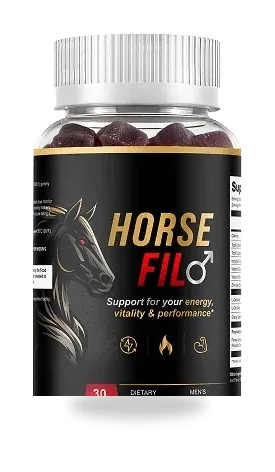
The small lever, used properly
One gummy a day, a named ingredient list and a sixty-day satisfaction promise — taken alongside the sleep, training and weight work, not instead of it. If you have decided that is the right role for a supplement, the official store is where the current panel and the current offer live.
Go to the Official HorseFil Store