Best Blood Sugar Supplements for Diabetics: The Five Questions to Ask First
We cover men's energy formulas here, and the question that arrives most often from that audience is not about stimulants at all. It is about glucose — what a supplement can honestly do about it, and what it cannot.
Quick answer: how should you shortlist a glucose-support product?
No dietary supplement treats, cures, prevents or reverses diabetes, so the useful way to shortlist the best blood sugar supplements for diabetics is to treat each product as a set of questions rather than an answer. Ask what it interacts with, what is actually on the panel and at what amount, how strong the evidence is behind each named ingredient, how you will measure whether anything changed, and what it costs to run it long enough to find out. A page that cannot answer those five is selling confidence, not information.
- Interactions come first. Several popular glucose-support ingredients can add to the effect of prescribed glucose-lowering medicine. That is a supervision issue for your clinician, not a selling point.
- Amounts matter more than names. An ingredient listed without a milligram figure tells you nothing about whether it matches what was actually studied.
- Evidence is uneven. Viscous soluble fibre has the most consistent human support in this category; several of the most heavily marketed botanicals have the least.

Why the phrase “best blood sugar supplements for diabetics” needs unpacking
The phrase carries a hidden assumption: that there is a category of products designed for people with diagnosed diabetes, ranked from best to worst, and that picking correctly is the task. That is not the regulatory or scientific position. In the United States, a dietary supplement may not be marketed as something that treats or manages a disease. Diabetes is a disease. Anything sold as a supplement is therefore, by definition, not being sold as a diabetes treatment — whatever the landing page implies with its charts and its urgency.
What these products may legitimately claim is support for glucose metabolism that is already within a normal range, or support for a nutrient status you are genuinely short of. That is a much narrower promise, and it is the promise you should be pricing. If you have diagnosed diabetes or prediabetes, the supplement question sits downstream of a treatment plan that belongs to you and your clinician; it does not replace any part of it, and it should never be the reason a prescribed dose gets skipped.
None of that makes the category worthless. Some ingredients in it do something measurable. It does mean the shopping question changes shape: not “which product is strongest” but “which product is honest about a modest effect, at an amount matching what was tested, that I can safely add to what I am already taking”. The five questions below are how you get there.
Question one: what does this interact with?
This is first because it is the only one with a downside worse than wasted money. Ingredients that plausibly lower glucose do not check whether something else is already lowering it. Stacked on insulin or a sulfonylurea, an additive effect can push blood glucose lower than intended, and the symptoms of that — shakiness, sweating, confusion — are not a sign the supplement is working well.
The specific ones worth raising with a pharmacist are berberine, which also inhibits drug-metabolising enzymes and can raise levels of unrelated medicines including certain statins and immunosuppressants; chromium, which can add to the effect of insulin and oral glucose-lowering drugs and should be separated from levothyroxine by several hours; bitter melon and gymnema, both of which are traditionally used precisely because of their glucose effects; and any viscous fibre, which changes the absorption timing of tablets taken in the same window. Fibre in particular is easy to manage — take medicines an hour before or several hours after — but only if somebody tells you.
An ingredient strong enough to move glucose meaningfully is strong enough to move it too far when it is stacked on a medicine designed to do the same job. Potency in this category is not a feature to shop for. It is a conversation to have before you start.
The practical move is unglamorous: photograph the supplement facts panel, take it to the pharmacy counter with your current medicine list, and ask the one question a pharmacist can answer in ninety seconds. That single step separates a sensible experiment from an avoidable one.
Question two: what is on the panel, and how much of it?
Turn the bottle over. You are looking for two things. First, whether each active is listed with its own milligram amount, or whether several are hidden inside a proprietary blend with a single combined figure. A blend tells you the order of the ingredients by weight and nothing else; the first name might be ninety per cent of the total and the last might be a dusting present for the label rather than the body.
Second, whether the botanical entries specify a plant part and a standardisation. “Cinnamon 500 mg” could be bark powder or an aqueous extract, and those behave differently. “Banaba leaf extract standardised to 1% corosolic acid” tells you what fraction you are actually getting. Where a label gives you a bare herb name and a number, treat the number as decorative.
This is where most shortlists collapse. People compare four products by the length of the ingredient list, when the informative comparison is amount versus studied amount, one ingredient at a time. A formula with three actives at researched levels is a better bet than one with fourteen at unknown ones, even though the second looks more generous on a comparison grid. If you are scanning for the best over the counter blood sugar supplement in a pharmacy aisle, the panel is the only page in the whole marketing package that has to be accurate.
A different formula, a different claim
HorseFil is not a glucose product and does not claim to be one. It is a once-daily men's gummy built around L-carnitine, L-citrulline and three adaptogens, with no caffeine on the list. If you want to see what it actually names on the panel before deciding anything, the official store lists it.
See the Official HorseFil StoreQuestion three: how strong is the evidence behind each named ingredient?
Evidence in this category is not uniformly weak, and it is not uniformly strong. It is uneven in a pattern worth learning, because the pattern predicts which claims will survive contact with a careful reader. Broadly: mechanical effects on a meal have the most consistent human support, nutrient corrections work when there is a shortfall to correct, and botanical effects range from plausible-but-thin to genuinely contested.
| Ingredient | Amount commonly used in trials | Proposed mechanism | Strength of human evidence |
|---|---|---|---|
| Psyllium and other viscous soluble fibres | Roughly 5–10 g before a meal | Gels in the gut, slows gastric emptying and carbohydrate arrival | Most consistent in this table; effect is on the meal, not the metabolism |
| Magnesium | Around the Recommended Dietary Allowance, from food or a supplement | Cofactor in glucose handling and insulin signalling | Observational data link higher intake with better glucose status; supplement trials are limited and mixed |
| Berberine | Commonly 500 mg two or three times daily | Activates AMPK; several downstream metabolic effects | A real signal across small trials, but variable quality, notable digestive side effects and serious drug interactions |
| Chromium | 200–1,000 mcg daily, against an Adequate Intake of 25–35 mcg | Supports insulin action as a trace mineral | Federal summaries describe effects as minimal and of uncertain clinical relevance |
| Cinnamon (cassia or Ceylon) | Roughly 1–6 g daily of powder or extract | Insulin-mimetic activity shown in laboratory work | Mixed and inconsistent in people; cassia also carries a coumarin caution at high daily intakes |
| Panax ginseng | Varies widely; often 1–3 g of root or a standardised extract | Ginsenoside effects on post-meal glucose handling | Small, short trials with inconsistent preparations; not enough to call settled |
| Bitter melon and banaba leaf | Extracts around 1–3 g, or banaba standardised to 1% corosolic acid | Traditional use plus laboratory evidence on glucose uptake | Thin: small, short, heterogeneous studies with results that do not line up |
Two honest observations about that table. The ingredient with the most reliable human data is the least exciting one on the list, and it works by physically changing how a meal behaves rather than by adjusting anything about you. And the ones with the loudest marketing tend to sit in the bottom rows. That inversion is the single most useful thing to carry into a comparison of top blood sugar supplements, whichever brand names are attached.

Question four: how will you know whether anything changed?
Most people answer this with how they felt, which is the one instrument guaranteed to mislead. Glucose is not reliably perceptible in the range where these products claim to operate, and the sensations people attribute to it — the mid-afternoon flatness, the post-lunch fog — have several competing explanations including sleep, hydration, meal composition and simply being at hour seven of a demanding day.
If you already test, you already have the instrument. Keep the routine you have and change one thing at a time, because a supplement started in the same week as a new walking habit and a smaller dinner has made itself untestable. Fasting readings are noisy day to day, so patterns over weeks are worth more than any single morning. Longer-term measures move on their own timescale — the standard three-month marker reflects roughly the preceding two to three months, which is why a fortnight of use tells you nothing about it either way.
Write it down. A note in your phone with the date you started, the exact product and amount, and one weekly line about what else changed is worth more than memory, which quietly rewrites itself in favour of whatever you spent money on. Whatever you decide about a product, decide it from the record.
Question five: what does it cost to run it long enough?
Almost every ingredient in the table above was tested over eight to sixteen weeks. That is the unit you are buying, and a single small bottle is usually a fraction of it. Working out the daily cost of the full trial period — not the shelf figure of one container — is the calculation that turns a shortlist into a decision, and it is also the one that makes several products quietly fall off the list.
Two things to check on the checkout page rather than the sales page. Whether the purchase is one-time or enrols you in a recurring shipment, and what the guarantee actually covers — the window, whether it starts at purchase or delivery, whether opened containers qualify, and who pays return shipping. Guarantees are frequently shorter than the mechanism they are backing, which is a design choice rather than an accident. When people search for a blood sugar supplement price, they usually mean the number on the button; the number that matters is the one attached to a real trial length.
What these products cannot do
They cannot treat, cure, prevent or reverse diabetes or any other disease, and nothing sold as a dietary supplement may be marketed as though it can.
They cannot replace prescribed medication, and they do not create room to reduce a dose. Any change to prescribed treatment is a clinical decision made with the person who prescribed it, informed by measurements rather than by how a week felt.
They cannot outrun the diet they are taken alongside. The composition and size of a meal moves post-meal glucose far more than any capsule taken before it, and no formula changes that arithmetic.
They cannot be judged in a fortnight. Nearly every trial worth citing ran for two to four months, and the marker most people care about needs about that long to move.
And they cannot substitute for a diagnosis. New thirst, unexplained weight loss, blurred vision or persistent fatigue are reasons to see a doctor, not reasons to open a browser tab and shop. That is the least commercial sentence on this page and the most important one.
Where a men's energy formula sits in all this
Worth being clear, since this site covers one. HorseFil is a men's energy gummy, not a glucose product: its named ingredients are L-carnitine, L-citrulline, panax ginseng, maca, rhodiola and grape seed, and its claim is support for energy, vitality and physical performance. Panax ginseng is the only overlap with the table above, and its glucose literature is thin enough that nobody should buy an energy formula hoping to get a metabolic one thrown in.
The reason the two categories get confused is that they describe the same complaint from different directions. Afternoon flatness is what sends people looking at both shelves. One shelf answers it with fuel transport and stress tolerance over weeks; the other answers it by changing what a meal does. Neither answers it as well as sleep, and both are honest only when they say so.
If format rather than ingredient is what you are weighing — drops under the tongue against capsules, or capsules against gummies — our piece on liquid drops versus capsules and what absorption really means takes that question apart, because the marketing there is even further ahead of the evidence than it is here.
Frequently asked questions
Can a supplement replace diabetes medication?
No. Dietary supplements are not medicines and may not be sold as a treatment for any disease. They do not replace prescribed medication, and no supplement gives you grounds to reduce or stop a prescribed dose. Any change to treatment is a decision for the clinician who prescribed it.
Which glucose-support ingredient has the strongest human evidence?
Viscous soluble fibre such as psyllium has the most consistent support, typically at around 5 to 10 grams taken before a meal. It works mechanically by slowing gastric emptying and the arrival of carbohydrate, so its effect is on the meal rather than on metabolism. It is also the least heavily marketed option in the category.
Do I need to tell my doctor about a glucose-support supplement?
Yes, and preferably before starting rather than afterwards. Berberine, chromium, gymnema, bitter melon and viscous fibres can all interact with prescribed medicines, either by adding to a glucose-lowering effect or by changing how another drug is absorbed or metabolised. Bring the supplement facts panel to the appointment or the pharmacy counter.
How long should a fair trial of one of these products last?
Most published trials ran eight to sixteen weeks, and the standard three-month blood marker reflects roughly the preceding two to three months. Ten days tells you nothing. Budget for the full period, change one variable at a time, and keep a written record so the decision is made from data rather than memory.
Where to check this
- National Center for Complementary and Integrative Health — Diabetes and Dietary Supplements: What the Science Says
- NIH Office of Dietary Supplements — Chromium, health professional fact sheet
- NIH Office of Dietary Supplements — Magnesium, health professional fact sheet
- Mayo Clinic — Diabetes treatment: using insulin and other medicines to manage blood sugar
- Harvard T.H. Chan School of Public Health — Carbohydrates and Blood Sugar
These are standing reference resources rather than citations of single trials. We link to the bodies that maintain the evidence summaries so you can check the current position yourself.
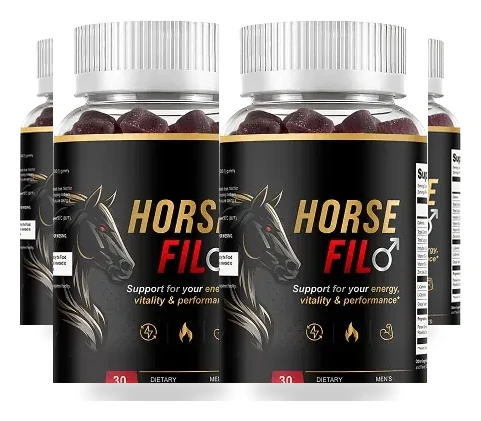
Read the HorseFil panel for yourself
One gummy a day, thirty per bottle, no caffeine and no autoship. It is an energy formula rather than a glucose one — but if that is the shelf you are actually shopping, the store lists every named ingredient and the current price.
Go to the Official HorseFil Store