Blood Sugar Drops Supplement or Capsules: Does Format Matter?
Liquid formulas sell on absorption. It is the most confident word on the label and the least examined one, so this is what actually happens to a dropper of tincture held under the tongue.
Quick answer: do liquid drops absorb better than capsules?
For most glucose-support ingredients, no. A blood sugar drops supplement usually reaches the bloodstream through the same route as a capsule — you swallow it, and it is absorbed in the small intestine — because the botanical extracts and minerals involved are the wrong size and chemistry to cross the lining of the mouth in any meaningful quantity. The real differences between the two formats are dose ceiling, taste, shelf stability and whether you will actually take the thing every day.
- Sublingual absorption is real but narrow. It works for a short list of small, fat-soluble molecules given in tiny amounts, not for gram-scale herbs or fibres.
- A dropper has a hard dose ceiling. A one millilitre serving cannot carry the amounts used in most published trials without becoming a syrup.
- Adherence beats absorption. A format you take daily for three months outperforms a theoretically superior one you abandon in a fortnight.
What a blood sugar drops supplement actually is
Strip away the packaging and you have a botanical extract suspended in a carrier. The carrier is usually vegetable glycerin, sometimes ethanol, occasionally a mix with purified water, plus flavouring and a preservative system because a water-containing liquid is hospitable to things a dry powder is not. The serving is a dropper, typically one millilitre, sometimes two.
That is a legitimate way to sell a supplement and it has genuine advantages. Liquids suit people who cannot swallow capsules, allow smaller and more flexible fractions of a serving, and can taste of something other than gelatin. There is nothing inherently soft about the format.
The problem is the sentence that almost always accompanies it: that liquid absorbs faster, or better, or bypasses digestion. Two of those three are usually irrelevant and the third is usually untrue for the ingredients involved. Understanding why takes about four minutes and saves a lot of money.
The sublingual claim, examined
The mucous membrane under the tongue is thin and richly supplied with blood vessels, and molecules that cross it enter the circulation directly, skipping the first pass through the liver. That is real physiology and it is why a handful of drugs are given this way. But the route is fussy about what it will carry. Broadly, a molecule needs to be small, reasonably fat-soluble, potent enough to matter in microgram-to-low-milligram amounts, and held in place long enough to cross.
The medicines that use the route successfully fit that profile exactly: nitroglycerin for angina, buprenorphine, and certain hormone preparations. Vitamin B12 is often given sublingually too, and it is instructive — the comparisons that exist suggest it works about as well as swallowing an equivalent oral dose rather than dramatically better.
Now hold a typical glucose-support ingredient against that profile. A cinnamon or bitter melon extract is a complex mixture of large, mostly water-soluble plant compounds, needed in hundreds of milligrams. Chromium is a mineral ion that the gut absorbs poorly by design. Psyllium is a fibre whose whole mechanism requires it to reach the stomach and gel there. None of these are sublingual candidates. Held under the tongue for thirty seconds, the overwhelming majority of the dose is then swallowed and absorbed exactly where a capsule would have released it.
Absorption is the most oversold word on a supplement label. It is asserted far more often than it is measured, and where somebody has measured it, the comparison is nearly always against a straw man rather than against a decent capsule.
There is a narrow case where liquid genuinely helps: a poorly water-soluble compound already dissolved in oil is presented to the gut in a more absorbable state than the same compound as a dry crystal in a capsule. That applies to fat-soluble vitamins, some carotenoids and curcumin preparations. It does not apply to most of what appears on a glucose-support panel.
The dose ceiling: what actually fits in a dropper
This is the argument that decides the question, and it is arithmetic rather than physiology. A one millilitre serving of a glycerin-based tincture can carry a limited mass of dissolved solids before it stops behaving like a liquid. In practice that means tens of milligrams of extract per serving, sometimes a couple of hundred at the high end with aggressive concentration.
Compare that with the amounts used in the human studies people cite. Berberine trials commonly used 500 mg two or three times a day. Cinnamon trials ran from about one gram to six grams daily. Viscous fibre work uses five to ten grams before a meal. Even the modest end of that range is an order of magnitude beyond a dropper.
So a liquid formula has three options: use a concentrated extract and claim equivalence to a much larger weight of raw herb, deliver a genuinely small amount and stay quiet about the studied amount, or ask for several droppers a day. Most take the first route, which is where the extract ratio arrives — a 10:1 concentration on the label meaning ten parts raw material became one part extract. Extract ratios are not lies, but they are not interchangeable with trial doses either, because what got concentrated depends entirely on the solvent and the process.
What one gummy a day actually contains
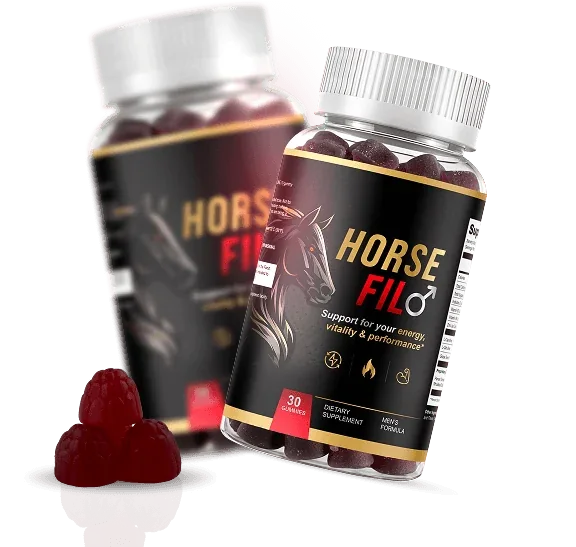
HorseFil takes the chewable route rather than the dropper: thirty gummies per bottle, one a day, no caffeine and no autoship. It is an energy formula rather than a glucose one, and the official store is the only page that lists what is on the current panel.
See the Official HorseFil StoreWhat capsules trade away, and what they buy
Capsules are boring, and their boringness is the point. A two-piece capsule or a compressed tablet can carry several hundred milligrams to a gram of material per unit, which is the only reason a product can match a studied amount without asking you to drink something four times a day. Dry powder in a sealed shell is also chemically calm: no water activity, no preservative system, far less to go wrong between the factory and month eight of the shelf life.
You give up two things. The first is taste flexibility, which is trivial. The second matters more: swallowing a capsule means the contents dissolve on the stomach's schedule, and if you have taken it with a large meal that schedule is slower. For an ingredient meant to act on a meal, timing beats format every time. That is why the honest answer to when is the best time to take blood sugar supplement servings is usually “with or just before the meal you are trying to influence”, whatever the container looks like.
Enteric coating is worth a sentence because it is the one capsule feature that genuinely changes absorption. A coating that survives stomach acid and releases in the small intestine protects acid-sensitive material and shifts where it lands. It also adds cost, and most products in this category do not bother.
Drops, capsules, gummies and powders side by side
The differences that matter are practical rather than pharmacological. Here is the same comparison a formulator makes before the first batch is produced.
| Format | Realistic dose per serving | Absorption route | Stability once opened | Main practical trade-off |
|---|---|---|---|---|
| Liquid drops or tincture | Tens of milligrams of extract, occasionally a couple of hundred | Mostly swallowed and absorbed in the small intestine, like anything else | Lowest — light, heat and air matter, and there is a use-by window after opening | Cannot reach the amounts used in most published trials |
| Capsules or tablets | Several hundred milligrams up to about a gram per unit | Dissolves in the stomach, absorbed downstream | Highest — dry powder in a sealed shell | Unremarkable; some people dislike swallowing them |
| Gummies | Low, and constrained further by the sugar or sugar-alcohol base | Chewed and swallowed; no sublingual advantage | Moderate; softens or fuses in heat, and actives can drift over shelf life | Adherence is excellent, dose density is poor |
| Powders | Highest — grams per scoop without difficulty | Dissolved or dispersed, then absorbed normally | Good if kept dry and sealed | Taste, mixing and scoop-to-scoop dosing error |
Read down the dose column and the pattern is obvious. Format is mostly a decision about how much of an ingredient you can physically deliver, and the marketing has attached itself to the one column — absorption — where the four options differ least.
Stability: what happens after you open the bottle
A dry capsule is a stable environment. A liquid is not. Water and glycerin allow slow chemical reactions to proceed, plant pigments and polyphenols oxidise on contact with air, and every dropper returned to the bottle brings back a small amount of saliva. This is why liquid supplements carry preservatives, amber glass and a period-after-opening symbol, and why storing one on a sunny windowsill is a worse idea than it looks.
Practically: keep liquids cool, dark and capped, respect the after-opening window, and do not buy a large bottle of something you take occasionally. None of this makes drops a bad format. It makes them a format with maintenance, which is a real cost when the plan is to take something daily for three months.
Adherence is the variable that actually decides this
Here is the uncomfortable finding that runs through medicine as a whole: the best-designed regimen loses to the one people follow. Adherence to daily preventive treatments is famously imperfect even when the stakes are high, and a supplement has lower stakes and no prescriber checking in.
So the question worth asking is not which format theoretically delivers more, but which one you will still be taking on day sixty. If capsules make you gag, the capsule's dose advantage is worth nothing. If a dropper lives on your kitchen counter and gets used with breakfast every morning, that habit is worth more than a formulation argument. Anyone hunting for the most effective blood sugar supplement is usually hunting in the wrong dimension — the effective one is the one that is still being taken when the trial period ends.
What changing format cannot do
It cannot turn a weakly supported ingredient into a well supported one. If the evidence behind a botanical is thin, putting it in a nicer bottle leaves it exactly as thin.
It cannot make a below-trial dose behave like a trial dose. This is the one that costs people the most, because “better absorbed” is used to imply that less is needed, and almost nobody has measured whether that is true for the specific ingredient in the specific product.
It cannot make any of these products a treatment. No supplement in any format treats, cures, prevents or reverses diabetes or any other disease, and anyone taking prescribed medication should clear a new supplement with a pharmacist first — several glucose-support ingredients add to the effect of glucose-lowering drugs.
And it cannot compress the timeline. Whatever the delivery system, the studies behind these ingredients ran two to four months, so that is the length of a fair test.
So which should you buy?
If the ingredient you care about is needed in grams, buy a powder and accept the taste. If it is needed in hundreds of milligrams, buy capsules, because nothing else reaches the amount without theatre. If your obstacle is remembering or swallowing, buy the format that removes the obstacle and stop optimising the rest — that trade is usually worth more than the dose you give up. Drops make sense for genuinely low-dose actives, for people who cannot manage capsules, and for anyone who wants to titrate in fractions. They do not make sense as a way to get a trial-sized amount of a botanical into you.
For context on the formula this site covers: HorseFil is a once-daily gummy, and it lives with exactly the dose ceiling described above. That is a fair criticism of any gummy, including this one, and it is the reason we keep saying the panel matters more than the pitch. The full trade-off between chewables, tablets and powders — including the sugar question that gummies raise and never answer — is in our comparison of supplement pills, powders and gummies.
Frequently asked questions
Do liquid supplements absorb better than capsules?
Usually not. Most glucose-support ingredients are large, water-soluble plant compounds or minerals that cannot cross the lining of the mouth in meaningful amounts, so a liquid held under the tongue is swallowed and absorbed in the small intestine, exactly where a capsule releases. The genuine exceptions are small, fat-soluble compounds given in tiny doses.
Why do drops usually contain less than capsules?
Because a one millilitre dropper can only carry a limited mass of dissolved solids before it stops behaving like a liquid. Capsules routinely hold several hundred milligrams to a gram of powder per unit. That gap is why liquid labels tend to quote extract ratios instead of the milligram amounts used in published trials.
When is the best time to take a glucose-support supplement?
For ingredients meant to act on a meal, such as viscous fibre, shortly before eating is the timing used in most studies. For nutrient-style ingredients such as minerals, consistency matters more than the clock, so pick a daily anchor and keep it. Timing is worth more attention than format in both cases.
Does an opened bottle of liquid supplement go off?
It degrades faster than a dry capsule. Water and glycerin allow slow chemical change, plant compounds oxidise on contact with air, and returning the dropper reintroduces saliva. Keep liquids cool, dark and tightly capped, and respect the period-after-opening symbol printed on the label.
Where to check this
- NIH Office of Dietary Supplements — Dietary Supplements: What You Need to Know
- National Center for Complementary and Integrative Health — Using Dietary Supplements Wisely
- PubMed — sublingual absorption and bioavailability (search record)
- Mayo Clinic — Dietary supplements: do you need them?
- Harvard T.H. Chan School of Public Health — Fiber
These are standing reference resources rather than citations of single trials. We link to the bodies that maintain the evidence summaries so you can check the current position yourself.
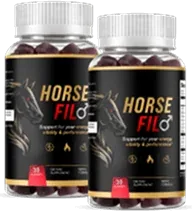
See the format HorseFil chose
A chewable taken once a day, thirty per bottle, with a sixty-day satisfaction promise behind it. Whether or not a gummy is the right container for you, the store's page is where the current ingredients and price are listed.
Go to the Official HorseFil Store