Blood Sugar Supplement Pills vs Powders vs Gummies Compared
Three containers for the same idea, with three different ceilings on how much can go inside. The format argument is usually presented as a matter of taste. It is really a matter of arithmetic.
Quick answer: which format should you choose?
Choose by dose first and habit second. Blood sugar supplement pills carry the most active material per unit, which is why they can match the amounts used in published studies; powders carry more still and suit ingredients dosed in grams, such as viscous fibre; gummies carry the least because sugar, gelling agents and flavour take up most of the room. Absorption differences between the three are small and largely theoretical, while the differences in dose and in whether you keep taking the product are large and entirely real.
- Pills and capsules: several hundred milligrams to about a gram per unit, cheapest per dose, dullest to take.
- Powders: the only format that comfortably delivers gram-scale ingredients, at the cost of taste, mixing and scoop accuracy.
- Gummies: the best adherence and the lowest dose density, plus a sugar or sugar-alcohol load that deserves a look on a glucose-focused product.
What actually changes when you change format
Four things change, and it is worth naming them in order of how much they matter.
The first is dose density — how much active material fits into one serving. This is the dominant difference, and it is the one that decides whether a product can plausibly replicate what a study did. The second is stability, meaning how well the contents survive the months between the factory and your last serving. The third is adherence, which is unglamorous and quietly decisive. The fourth is absorption, which is where the marketing spends nearly all of its attention and where the real differences are smallest, because all three formats end up doing the same thing: dissolving in your gut and being absorbed in the small intestine.
Everything below is a consequence of those four, and the order rarely changes. If a page tells you its gummy absorbs better than a capsule, it is arguing about the fourth item to distract you from the first.
Why blood sugar supplement pills remain the default format
Capsules and tablets dominate this category for an unromantic reason: they hold the most useful amount of material for the least money. A two-piece capsule takes several hundred milligrams of powder and a compressed tablet can take close to a gram, which means a two-capsule serving can carry the sort of amount that appears in a published protocol. No other convenient format gets close on a cost-per-milligram basis.
They are also the most stable. Dry powder inside a sealed shell has almost no water available for chemical reactions, needs no preservative system, and tolerates a warm cupboard far better than a chewable does. That is why the shelf life is longer and why the potency on the label has the best chance of still being in there at the end of it.
The trade-offs are real but small. Some people dislike swallowing them. Large tablets with heavy binder loads can disintegrate slowly and inconsistently. And a capsule tells you nothing about quality by itself — the format is a container, not a credential. But when somebody asks what is the best blood sugar supplement on the market, the answer is far more likely to arrive in a capsule than in anything else, simply because that is where the researched amounts fit.
Powders: the format for gram-scale ingredients
Some ingredients cannot be put in a capsule at a useful amount, and that is the entire case for powders. Viscous soluble fibre is the clearest example: the human work uses roughly five to ten grams before a meal, and its mechanism requires enough material to physically gel in the stomach and slow how quickly carbohydrate arrives downstream. That is ten to twenty capsules, or one scoop.
Inositol, glycine, several amino acids and whole cinnamon powder sit in the same bracket. If you want the amount that was studied, powder is not a preference, it is the only route.
What you give up is precision and pleasantness. A scoop is a volume measure applied to a substance whose density changes with settling, humidity and how firmly you pack it, so scoop-to-scoop variation is larger than most people assume; a kitchen scale removes the problem entirely and costs less than a month of most supplements. Powders also need mixing, taste of what they are, and pull moisture from the air if left open. For a fibre in particular, adequate water is not optional — taken with too little fluid, a viscous fibre is genuinely uncomfortable.
The chewable route, one gummy a day
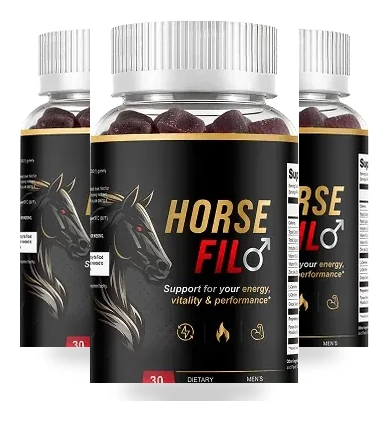
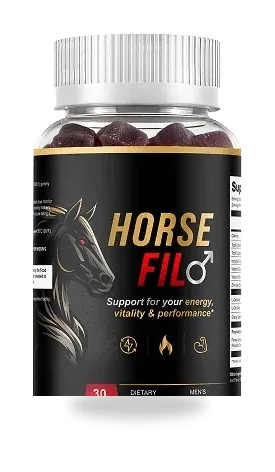
HorseFil sits on the gummy side of this comparison: thirty per bottle, one daily, no caffeine and no autoship. It is a men's energy formula rather than a glucose one, and the official store is where the current panel and price are published.
See the Official HorseFil StoreGummies: the best adherence and the lowest ceiling
Gummies solve the problem that sinks more supplement plans than any formulation flaw: people forget, or they quietly stop. A chewable that tastes pleasant gets taken. If the honest failure mode of a capsule is a full bottle in a drawer, that is a bigger loss of effect than any absorption difference on any label.
The cost is structural. Most of the mass of a gummy is the matrix itself — sugars or sugar alcohols, pectin or gelatin, water, acid, colour and flavour. What is left for active ingredients is small, typically a fraction of what the same volume of capsule powder would hold. That constraint is not a manufacturing failure; it is the format working as designed. It does mean a gummy version of an ingredient studied at 500 mg three times a day is not a smaller version of the study. It is a different intervention wearing the same ingredient name.
Two further costs are worth knowing. Heat: gummies soften, fuse and lose shape in a hot car or a summer post box, and that is a physical change to the product you paid for. And potency drift: manufacturers add overages because some actives degrade in a moist, warm, acidic matrix faster than in dry powder, which is one reason independent testing of chewable products has repeatedly found label and content disagreeing in both directions.
The sugar question nobody prints on the front
A glucose-focused product delivered in a sweet chewable invites an obvious question, and it deserves a straight answer rather than a defensive one. A typical gummy carries somewhere between one and three grams of added sugar, or a similar weight of sugar alcohols such as maltitol, sorbitol or isomalt if it is marketed as sugar-free.
In context, one or two grams of sugar is a small fraction of what a slice of bread delivers, and for most people it is not the deciding factor. But it is not nothing on a product whose entire pitch is glucose, and it becomes material if the serving is two or three gummies a day, every day, for months. Sugar alcohols avoid most of the glucose issue and bring their own: they are incompletely absorbed and reliably cause gas, bloating or loose stools in some people at modest daily amounts.
The way to settle it is the nutrition panel rather than the marketing. Total sugars, added sugars and sugar alcohols all have to be declared. Anyone comparing the top blood sugar support supplements sold as chewables should read that block first and the ingredient claims second.
A format is a set of constraints, not a feature. Every gram of sugar, pectin and flavour in a chewable is a gram that cannot be active ingredient — and every capsule that never gets swallowed delivers exactly nothing, however well designed the powder inside it was.
The three formats side by side
Same ingredients, three containers, and the differences that actually show up in practice.
| Pills and capsules | Powders | Gummies | |
|---|---|---|---|
| Realistic dose per serving | Several hundred milligrams to about a gram per unit | Grams, limited mainly by taste and glass size | Low; the sugar and gelling base occupies most of the mass |
| Can it match studied amounts? | Usually, sometimes with two or three units | Yes, including gram-scale fibre protocols | Rarely for gram-scale ingredients |
| Stability on the shelf | Best — dry powder, sealed shell, long shelf life | Good if kept sealed and dry | Weakest — moisture, heat and acidity all act on the actives |
| Relative cost per dose | Lowest | Low for bulk ingredients | Highest, because you pay for the matrix as well |
| Dosing accuracy | Fixed per unit | Scoop variation unless you weigh it | Fixed per piece |
| Likelihood you still take it in month three | Moderate | Lowest — mixing is a chore | Highest |
| Added sugar to account for | None | Usually none; check flavoured versions | Typically one to three grams per piece, or sugar alcohols |
There is no winning column. There is a column that matches your ingredient and your habits, and reading the grid this way — rather than looking for the best natural blood sugar supplement in the abstract — is what makes the choice obvious in about a minute.
What the label claim means over time
One technical point that cuts across all three formats. The amount printed on a supplement facts panel is what the manufacturer stands behind through the shelf life, not necessarily what a laboratory would find in the jar on a given Tuesday. Firms build in overages to cover degradation, and how much degradation happens depends heavily on format: a dry capsule loses very little, a moist chewable can lose a good deal more, faster, especially if it has spent a week somewhere warm.
This is why third-party testing is worth more than any format claim, and why the storage instruction on the back is not boilerplate. Cool, dry and out of direct light genuinely extends the useful life of what you bought — and it matters most for exactly the format that gets left in a gym bag.
What format cannot do
It cannot make an ingredient work. If the human evidence behind a botanical is thin, it is equally thin in a capsule, a scoop and a gummy.
It cannot turn any of these products into medicine. No supplement in any format treats, cures, prevents or reverses diabetes or any other disease. If you take prescribed glucose-lowering medication, several common ingredients in this category can add to its effect, which is a reason to speak to a pharmacist before starting rather than after.
It cannot rescue a below-trial dose. This is the practical trap in the whole comparison: a chewable that names the right ingredient at a fraction of the studied amount is not a gentler version of the study, it is an untested amount with a familiar name on it.
And it cannot shorten the timeline. Two to four months of consistent use is what the underlying research used, whichever container you chose.
A decision rule that takes thirty seconds
Start with the ingredient. If it is dosed in grams, buy powder. If it is dosed in hundreds of milligrams, buy capsules. If neither of those is the constraint, buy the format you will actually take every day for three months, because adherence outranks every remaining consideration on this page. Then check three things on the back: the amount per serving against the amount used in research, the added sugar or sugar alcohol line if it is a chewable, and whether the actives are named individually or hidden inside a blend.
For the record on the product this site covers, HorseFil is a once-daily gummy and therefore inherits the ceiling described above — a fair criticism of the format, and one we would rather state than skate past. Where the ingredient argument matters more than the container, our piece on bitter melon and banaba leaf looks at what the human evidence behind two popular botanicals actually supports.
Frequently asked questions
Are supplement gummies less effective than capsules?
Not because of absorption, which is broadly similar once both are swallowed. The difference is dose density: sugar, gelling agent, water and flavour take up most of a gummy, leaving far less room for active ingredients than a capsule of the same size. For ingredients studied at hundreds of milligrams or more, that gap matters.
How much sugar is in a typical supplement gummy?
Usually one to three grams of added sugar per piece, or a similar weight of sugar alcohols such as maltitol or sorbitol in sugar-free versions. It is declared on the nutrition panel. Sugar alcohols avoid most of the glucose question but are incompletely absorbed and can cause bloating or loose stools in some people.
Why do some ingredients only come as powders?
Because they are dosed in grams. Viscous soluble fibres are the clearest case: studies typically use five to ten grams before a meal, and the mechanism depends on having enough material present to gel in the stomach. That amount would take ten to twenty capsules, so a scoop is the only practical delivery.
Does the amount on the label stay in the product until the expiry date?
The printed amount is what the manufacturer stands behind through the shelf life, and firms add overages to allow for degradation. How much is lost depends strongly on format and storage: dry capsules lose very little, while moist chewables kept somewhere warm can lose considerably more. Cool, dry and dark storage is not boilerplate advice.
Where to check this
- NIH Office of Dietary Supplements — Chromium, consumer fact sheet
- National Center for Complementary and Integrative Health — Dietary and Herbal Supplements
- PubMed — label and content analyses of dietary supplements (search record)
- Mayo Clinic — Added sugars: how they fit into a daily diet
- Harvard T.H. Chan School of Public Health — Added Sugar in the Diet
These are standing reference resources rather than citations of single trials. We link to the bodies that maintain the evidence summaries so you can check the current position yourself.
Check the panel before the pitch
Thirty gummies, one a day, a named ingredient list and a sixty-day satisfaction promise. Whatever format you end up choosing, read the back of the bottle first — the store publishes the current one.
Go to the Official HorseFil Store